This Red Partisan supplement was distributed at a Spartacist League public forum in London on 17th October, where they discussed the new issue of Spartacist, concerning their own recent 9th International Conference.
The new issue of the English Language international organ of the International Communist League (Fourth Internationalist), Spartacist issue 71, September 2026, has an innovative article by Vincent David titled “Fourth International After World War 2 – How Trotskyism Fractured”. The thesis he puts forward is an important corrective to the conceits of many ‘Trotskyists’ today; he points out that a fundamental disorientation overcame pretty much the entire Fourth International by the end of WWII. So fundamental was this that it is questionable whether the movement could be regarded as a revolutionary force.
His thesis is that the FI completely failed to understand that the post-war situation was fundamentally different to the sketchy predictions of Trotsky and the FI leadership before the war. Instead of a social crisis and economic collapse of European and US capitalism, the conquest of imperialist hegemony by the United States enabled it to both save European capitalism economically, and reduce the European imperialist powers to its vassals. Instead of the disintegration and collapse of the Stalinist bureaucracy in the USSR, the titanic struggle against the 1941 Nazi invasion drove the Nazis back to Berlin and their doom. This ended with the bureaucratic overthrow of capitalism from the Baltic to the Adriatic, giving the impetus and broader context for the overthrow of capitalism in China, Korea, Vietnam, later Cuba and a huge political accelerant for the destruction of the European colonial empires by mass-based nationalist movements after WWII.
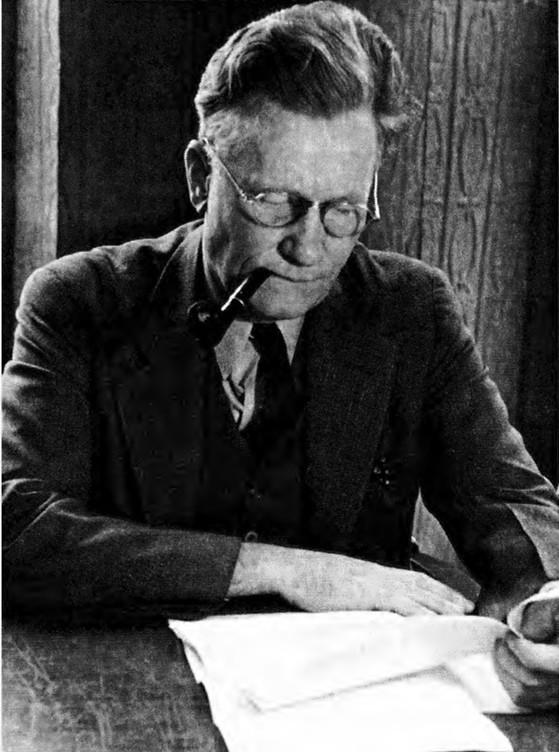
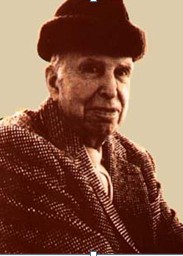
He points to the failure of any section of the FI to fully grasp what happened, and put forward a concrete revolutionary perspective at the time. He characterised thus the reactions of the main leaders of the FI, who were to become leaders of different factions, and then separate, counterposed organisations:
“The leaders of the movement—from Michel Pablo and Ernest Mandel, who emerged from the underground in Europe, to James P. Cannon in the U.S.—proved incapable of squaring this new reality with the literal text of the 1938 Transitional Program. Rather than responding to new problems with new answers, they clung to outdated predictions and retreated into a defensive, rigid orthodoxy. Year after year, official documents and resolutions stubbornly predicted an imminent economic meltdown, the rise of bonapartism in Europe and the coming World War III, completely blind to the capitalist stabilization occurring in Europe.”
[…]
“Stuck in sterile orthodoxy, the Fourth International was incapable of understanding how the Cold War was forcing Stalinist and nationalist leaders into confrontation with the American empire and its imperial partners. Because they could not grasp these living dynamics, they dismissed mass support for these leaderships as mere subjective and temporary confusion. Unable to engage the real contradictions within these movements, the International retreated into an abstract, Europe-centric framework—paying lip service to the colonial revolution while remaining politically blind to its true significance and specific tasks.”
Such documents as the US SWP’s Theses on the American Revolution predicted imminent economic collapse and the eruption of major struggles, and were completely at odds with the way post-war development was actually progressing.
He then quotes Trotsky from Lessons of October that ““The party which does not keep step with the historical tasks of its own class becomes, or runs the risk of becoming, the indirect tool of other classes” and goes on to demonstrate that the FI leaders embraced a Stalinophobic position, calling for the withdrawal of Soviet troops from Eastern Europe in 1946. In 1948 the Second World Congress of the FI’s main document was titled “Against Wall St and the Kremlin” – a third-campist thrust. The FI rejected the idea that Stalinists could lead any overturn of capitalism, which disarmed them before first the Yugoslav revolution, then the Chinese revolution. This generated a confused mixture of illusions in Tito particular, and a belief that his regime was no longer Stalinist. The US SWP failed to defend North Korea for several months at the start of the Korean war. Comrade David sums up the events that the FI was failing to analyse correctly by saying:
“…the International spent the years leading up to 1948 claiming it was impossible for movements under Stalinist leadership to carry out any social overturn. In China, as Communist forces led by Mao were inflicting one defeat after another on the nationalist Guomindang, the Fourth International insisted that the CP was capable only of betrayal. Worse even, Chinese Trotskyists advocated a ceasefire in the civil war and actually opposed the victory of the Communist forces! In East Europe, as the ruling classes were systematically liquidated by the Red Army, the Fourth International doubled down on denying reality, insisting at the 1948 Congress that these states remained fully capitalist. The fear that accepting reality would lead to conciliating Stalinism was paralyzing the comrades.”
Pabloism emerges
Subsequently, the head of the FI International Secretariat, Michel Pablo, reacted with his (in)famous 1951 document Where Are We Going?, which advocated deep entryism into particularly Stalinist, but also social democratic parties, believing that a ‘new world reality” had rendered Stalinist parties centrist, capable of “roughly outlining a revolutionary orientation” and that the job of Trotskyists was to push these parties to the left. This split the FI in 1953 with an international faction led by the US SWP denouncing Pablo as ‘liquidationist’.
Comradely David’s talk is ground-breaking when he says:
“I am going to do something quite dangerous and unprecedented here. I am going to defend Pablo on a number of points. It is essential to cut through the rigid dogmas of the traditional anti-Pablo camp, which our own tendency has, in some cases, repeated. Pablo was trying to grapple with real life; his fatal error was drawing non-revolutionary conclusions from it.”
He goes on to partially defend Pablo without endorsing his overall scheme, which he does regard as liquidationist:
“The anti-Pabloites raised a hue and cry, denouncing Pablo for viewing the world through the prism of two camps—the imperialist camp led by the U.S. on the one hand, and the camp of the USSR and the colonial revolution. The anti-Pabloites claimed Pablo was erasing the fundamental class struggle between the bourgeoisie and the working class. This was a rigid, undialectical critique. During the Cold War, the global class struggle was objectively refracted through the concrete antagonism between U.S. imperialism and the Soviet bloc—just as today, it is refracted through the antagonism between the U.S. and China. This does not mean class struggle ceases to exist within these blocs. Social reality is made of multiple layers. But to deny that the world consisted of a struggle between the imperialist and Soviet camps in the name of a ‘pure’ bourgeois-versus-worker line of battle leads immediately to ‘Third Campism,’ which always ends up capitulating to imperialism.”
He also defended aspects of Pablo’s entryism perspective, without endorsing Pablo’s non-revolutionary conclusion about its purpose:
“…it was entirely correct for small propaganda groups to seek entry into mass Stalinist or nationalist organizations, even with a long-term perspective. Whether this is possible or how to do it depends on the concrete. … If the raw material of the vanguard was to be found inside the CPs or colonial liberation movements, while the Fourth International had only small forces, then it was vital to have a perspective to enter. The problem was not the tactic; it was the political justification for it….”
And he points out that the criticism of Pablo’s opponents was generally Stalinophobic:
“Many accused Pablo of revising the nature of Stalinism. He definitely did—but not always in the way the anti-Pabloites claimed. The SWP majority’s main line of attack against Pabloites was the mantra: Stalinism is counterrevolutionary through and through. … Such formulations are not only disorienting. They are false”.
[…]
“The smashing of a capitalist state, the destruction of landlordism, the expulsion of imperialism—even if carried out under bureaucratic control—is the opposite of counterrevolutionary! It is highly progressive. Furthermore, in China, Yugoslavia, Vietnam and elsewhere, social revolutions were the product of powerful revolutionary upsurges of the masses, pushing Stalinist leaders to go way beyond what they wanted. While Pablo did prettify those forces, his opponents simply wrote off the deep, living contradictions within those movements. The labelling of social revolutions as ‘counterrevolutionary’ was just a lazy way to sweep a problem away rather than solving it. It was also the surest way to guarantee the isolation and discrediting of Trotskyists.”
And he explains precisely what is wrong with Pabloism:
“The problem is the following: the seizure of power in one country does not complete the revolution, but only initiates it. As long as imperialism remains, the conquests of a single country continue to be subject to imperialist asphyxiation and the threat of reversal. Therefore, a revolutionary orientation can be nothing but a conscious strategy for world revolution. This is what the early Comintern was built for.
And this is not the path the Chinese, Yugoslav or Korean Communist Parties were following. They did not ‘cease to be Stalinist Parties.’ Pablo reduced Stalinism to the following of orders from Moscow. This is not what Stalinism is fundamentally. Stalinism is the subordination of the world revolution to the building of socialism in one country, which leads to seeking an illusory peaceful coexistence with imperialism. It arises from the interests of a privileged layer, separated from the masses and caught between them and world imperialism.
Tito leaned on U.S. imperialism against the USSR, leading to his total capitulation in the face of the Korean War. The CPC’s foreign policy was geared toward preserving the People’s Republic of China at the expense of the world revolution, as seen with the huge pressure it put on the Vietnamese CP to accept partition in 1954 or its later betrayal of the Indonesian CP.
Of course, Pablo was correct to argue to support these revolutions. He was correct to argue that Trotskyists had to link themselves to the masses under Stalinist leadership, including through entry tactics. What was fatal in his tactics was that they were all motivated not by the need to build a revolutionary current within them, but by the illusion that the ‘objective process’ would push Communist parties to become revolutionary. This notion was then quickly extended to all sorts of forces, from the MNR in Bolivia, to Ben Bella in Algeria and even to the left wing of the Labour Party!”
The conclusion he draws is:
“The task of the era was to defeat the American empire. The only coherent way the Fourth International could challenge Tito, Mao, all the CPs and the nationalist leaders was on the terrain of the world revolution. This isn’t an abstraction. It meant developing a serious strategy that sought to defend the workers states based on the intensification of the class struggle abroad against imperialism. And from this standpoint denounce the CPs’ accommodation to imperialism as well as their narrow and nationalist strategies to defend the revolutions at the expense of workers, national minorities and the international proletariat.”
His criticism of the ‘Anti-Pabloites” is damning:
“While Pablo openly tailed Stalinist and nationalist movements, the International Committee retreated into a thoroughly sectarian, sterile, and reality-denying approach to those same movements. … And one of the most damning indictments of this split was its geography. By 1953, the majority of the Fourth International’s membership was likely located in the colonial and semicolonial world—across Latin America and Asia. However, at its creation, the bulk of the International Committee was based in imperialist countries, with the majority of members from the colonial and semi-colonial world staying with Pablo.
And this is the tragedy of the 1953 fracture. The Trotskyist movement split into two broken halves, neither of which could offer a coherent, revolutionary answer to Stalinist and nationalist forces in the fight to defeat the American empire.”
And in the introduction, he puts forward the following critique of contemporary Trotskyism, which certainly strikes home in its description of what has happened to the Trotskyist movement:
“By 1953, the Fourth International had fractured in a fatal split. And those splinters would themselves split again, and again, most often in confused and obscure disputes. Fast forward to today, there have been at least 71 different rival international tendencies claiming the mantle of Trotskyism, with at least 35 still in existence (according to comrade Markov’s research). And each of these currents would proclaim themselves to be the real continuity of Trotskyism, against all other ‘revisionists.’ These are the symptoms of a movement in crisis, which we must understand if we are to claim to unite revolutionary forces today.”
At one level this is a perfectly reasonable point: the notion that any literal continuity of ‘pure’ Trotskyism exists today, or could exist, by some process of laying on of hands from generation to generation, is an idealist fantasy given that even the best of these political forces represented a complex political admixture derived from different trends. Every real movement has that character. The question is not of one of literal continuity, but rather of what should be the correct attitude of Marxists to any given political question that occurs, and also, since no question occurs in isolation, to a variety of questions both in their contemporary interaction as well as their successive sequential interactions. In that sense, everything is up for discussion, but this is not an idle matter of abstract debate, but a matter of theory and history as a guide to action. The only purpose of such debates can be to strengthen our political understanding of the questions we have to deal with today, to formulate a correct revolutionary practice going forward. He/she who fails to learn from history is doomed to repeat it, as comrade David in his own way points out. He makes a very good case that the ICFI was as egregiously Stalinophobic – itself a form of capitulation to imperialism – as the Pabloites were liquidationist toward Stalinism, and the combination of the two was the germ of the extreme fragmentation of the Trotskyist left. One key lesson of this is that at any point in time, getting things right is crucial not just for now but for the future, and conversely getting things wrong can have adverse effects long into the future.
“Campism” vs Third Campism
To extend this discussion to Ukraine, comrade David writes, in a section subtitled “The ‘Theory of Blocs’”:
“…During the Cold War, the global class struggle was objectively refracted through the concrete antagonism between U.S. imperialism and the Soviet bloc—just as today, it is refracted through the antagonism between the U.S. and China. This does not mean class struggle ceases to exist within these blocs. Social reality is made of multiple layers. But to deny that the world consisted of a struggle between the imperialist and Soviet camps in the name of a ‘pure’ bourgeois-versus-worker line of battle leads immediately to ‘Third Campism,’ which always ends up capitulating to imperialism.”
The formulation about China is one-sided, and too hasty to shuffle away the USSR (or what remains of it, which is mainly Russia and Belarus) from this antagonism. Though it is correct to say that China, as a giant deformed workers’ state, is the West’s primary antagonist, it is not their exclusive antagonist. The antagonism of the Western bourgeoisie, on both sides of the Atlantic, for Russia is if anything now more vehement than when the USSR was still a workers’ state, i.e., before 1991. This is because they perceive that the counterrevolution is incomplete, the neoliberal shock that was supposed to bury the workers state once-and-for-all, has been rolled back, that Putin is a creature of the old USSR apparatus in spite of his non-communist formal beliefs, and that Russia’s mixed economy (over 50% state owned) is a travesty of what they would expect from capitalist restoration (a ‘socialist’ deformation, so to speak).
Above all, for all the Western fulminations about Putin being allegedly a ‘dictator’, he does allow various Western pollsters and the like to survey the Russian population, and those agencies tell them that Putin does have massive support among the Russian population, for his rollback of the murderous neoliberal shock treatment that Yeltsin and the neoliberal West imposed on Russia in the 1990s. They see Belarus as an even more horrible example of a stalled counterrevolution – ‘capitalism’ with huge ‘socialist’ deformations, in a sense the dialectical mirror image of a deformed workers state, with a new form of combined and uneven development involving the intertwining of capitalist and post-capitalist modes of production.
Western bourgeois hatred of Russia has transformed from old-style Cold War anti-communism, which professed to be ‘democratic’ and ethnically neutral, to a virulent Russophobia today, where Russian people and culture are simply demonised. This actually bears resemblance to Hitler’s hatred of Jews. It is worth remembering that Hitler’s Jew-hatred was predicated on the delusion that Jews were intrinsically, organically inclined to ‘subversion’, and were the source of Marxism and Bolshevism. Zionism has cured that delusion among the bourgeoisie. Instead, we have the belief that Russians are intrinsically inclined to disobedience to neoliberalism’s categorical imperatives – ‘subversive’ and communist in effect – and that Hitler was right to hate and massacre Russians (though not Jews). That is the belief system that is behind Western imperialist anti-Russian hatred and their arming of open Nazis in Ukraine who glory in Hitler’s Operation Barbarossa, to kill Russians and Russian-speakers. Much mainstream Western anti-Russian propaganda today resembles Nazi Anti-Jewish hatred, and it has infected part of the left.
The different attitude of Trump to Russia is a product of his own position as a de-facto hireling of Israel and Likud in particular, whose billionaire Adelson dynasty paid for his three election campaigns so that he could wage war against Iran on their behalf, which Biden, Obama and earlier GW Bush and the Clintons refused to do. The Zionists are well aware that the declining US does not have the resources to do both. The “Russiagate” conspiracy theory that Trump is somehow a Kremlin agent was (and is) a cowardly means of the US bourgeois mainstream to try to combat this Israeli interference in US politics without naming who is actually responsible, which would cause a huge crisis in intra-imperialist politics, which is on the verge of happening anyhow because of Trump’s defeat at the hands of Iran.
There is a major contradiction between comrade David’s partial defence of the ‘Theory of Blocs’ as put forward by Pablo, and this passage about Ukraine in the document from the ICL’s 9th International Conference:
“This is the central flaw of ‘campism.’ It rejects proletarian independence as the guiding thread of the anti-imperialist struggle and supports any force opposed to the U.S. and its allies, regardless of its class character or policies. Under this logic, states such as Russia and the Islamic Republic of Iran, or alliances like BRICS+ are treated as progressive poles of resistance simply because they present a challenge to U.S. dominance. This logic of lesser-evilism ends up excusing the crimes and oppression carried out by such forces on the grounds that they weaken a rival.
“The implications of this approach are disastrous. Siding with Russia in the Ukraine war, for example, on the basis that it is fighting a NATO proxy accepts and legitimizes the national oppression of Ukrainians as a lesser evil in the struggle against U.S. imperialism. This further divides the working class in Eastern Europe, binding it to its respective rulers, thus obstructing its revolutionary unity against the dominant forces responsible for the current status quo in the region: the U.S., EU and NATO.” (https://iclfi.org/spartacist/en/71/unite)
Regarding Russia, this is actually a wobble away from the correct points comrade David made about the ‘theory of blocs’, cited earlier. It could be updated thus:
“ … the anti-imperialist struggle, which the proletariat must champion for its own class reasons, is objectively refracted through the concrete antagonism between imperialism and Russia (and ultimately China). This does not mean class struggle ceases to exist within these blocs. Social reality is made of multiple layers. But to deny that the world consists of a struggle between the imperialist and anti-imperialist camps in the name of a ‘pure’ bourgeois-versus-worker line of battle leads immediately to ‘Third Campism,’ which always ends up capitulating to imperialism.”
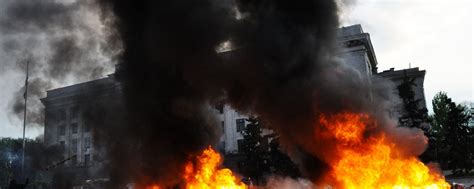
There is no evidence that Russia is fighting today for the national oppression of Ukraine. It is fighting against the national and language-based oppression of the Russian-speaking people of the South-Eastern half of what was Ukraine, centred on the Donbass. That oppression began with the far-right Maidan coup, instituted by the US-funded National Endowment for Democracy in 2014, with a bloody ‘anti-terrorist operation’ against Russian-speaking citizens in the Donbass who did not consent to be governed by a Neo-Nazi regime bent on stamping out their language. This was accompanied by massacres by Ukrainian Nazis of Russian-speakers in places like Odessa, outside the Donbass. Russian troops have fought in the mainly Russian speaking areas of Ukraine, and have not sought to conquer the Ukrainian-speaking West.
They are making steady but excellent progress in painstakingly defeating the fascist occupiers of the Donbass, and rebuilding towns and cities that were hugely damaged by the Nazis – Mariupol being a prime example. The real logic of this war is a comprehensive partition of Ukraine along language lines, possibly with some special arrangement for Kiev, which is more mixed. This is the consequence of trying to supress the native language of around half the population. There is no evidence that Russia aims to conquer and rule Western Ukraine. There is a possibility that Poland and perhaps Romania/Moldova may step in when Ukraine loses the war and take back territory that is historically Polish or Romanian-speaking, but that is nothing to do with Russia. Denazification and demilitarisation of Ukraine clearly means an Austria-like status for a rump, neutral Ukraine. That is just as reasonable for Russia as the expulsion of US bases from the Persian Gulf is for Iran.
The Russian People and Oppression
Many Russian nationalists, including Putin, are critical of the early Bolsheviks for including overwhelmingly Russian and Russian-speaking areas like the Donbass and Odessa in the early Ukrainian Soviet Socialist Republic. In the light of today, they have a point, as with the counterrevolution, those populations became oppressed. It is clear that other means would have been better . Putin’s other criticisms seem doubtful. Such as if matters had been addressed differently, Ukrainian might have been seen as merely a dialect and absorbed into Russian the way such dialects as Provençal or Picard were into French. That is far less convincing.
There is no evidence, contrary to Western propaganda, that Putin aims to reconquer a Great Russian empire. In fact, Putin appears to be a lesser-Russian nationalist, akin to Atatürk. The stereotype of Russians as arch-imperialists is reactionary and should not be indulged, even when it appears on the left, as from the social-imperialist contemporary United Secretariat, who just echo NATO and Western imperialism. Russian imperialism ceased in 1917, and was problematic even then in some ways as Trotsky pointed out in his History of the Russian Revolution:
“India participated in the war both essentially and formally as a colony of England. The participation of China, though in a formal sense ‘voluntary,’ was in reality the interference of a slave in the fight of his masters. The participation of Russia falls somewhere halfway between the participation of France and that of China. Russia paid in this way for her right to be an ally of advanced countries, to import capital and pay interest on it – that is, essentially, for her right to be a privileged colony of her allies – but at the same time for her right to oppress and rob Turkey, Persia, Galicia, and in general the countries weaker and more backward than herself. The twofold imperialism of the Russian bourgeoisie had basically the character of an agency for other mightier world powers.” (https://www.marxists.org/archive/trotsky/1930/hrr/ch02.htm)
This was the feeblest manifestation of imperialism, the weak link that did not survive the first imperialist war before being torn out by the roots by the victorious proletariat – mainly that of Russia. In the aftermath of the revolution, Soviet Russia was invaded by 13 different imperialist armies. That invasion was followed 22 years later by Hitler’s bloody counterrevolutionary assault. All these events make it entirely reasonable to regard Russians as a population (indirectly) oppressed by Western imperialism, not an incorrigible oppressor people, despite all the crimes of Stalinism. That is the purpose of the plan behind the West’s anti-Russian drive, as laid out in Brzezinski’s Grand Chessboard design – the breakup of Russia and its subordination to Western imperialism.
The image of Russia and the Russian people as habitual Great Russian imperialists, striving to conquer Europe, is a reactionary myth. Oppressive Russian nationalism was indeed a problem to be dealt with by the Bolsheviks, and there was a revival of that with the degeneration of the revolution under Stalinism, but administrative attempts to dilute the influence of the Russian population by placing portions of that population in new non-Russian republics, in the light of hindsight, might not have been the best way to deal with this national question. Nothing is above questioning or reconsideration in the light of historical experience. And Trotskyists should have no truck with third campism today any more than in 1953, as comrade David rightly pointed out about the earlier case. We cannot rearm the proletariat, either in the West, or Russia and Ukraine for that matter, for proletarian revolution without confronting the reactionary role of Russophobia and third-campism today.