A historic victory for the working class against imperialism and fascism.
In October 2026, Brazil became the centre of a global dispute, partially and momentarily won by the working class. The wave of street protests against the cost of living, war, the right wing, and imperialism that swept through Europe translated in Brazil into spontaneous and massive support for Lula’s victory.
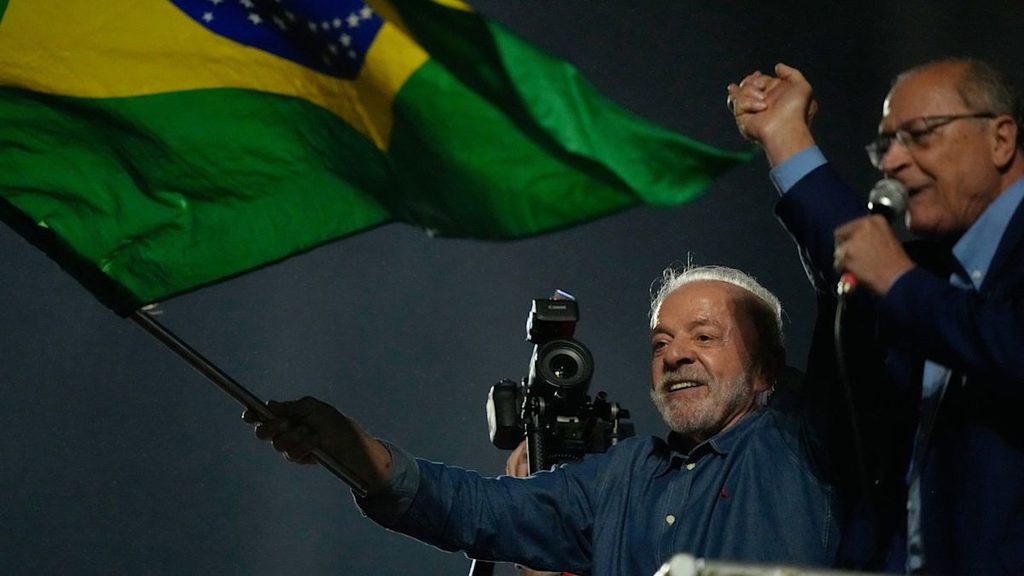
The re-election was welcomed by the leaders of Mexico, Spain, Russia, China, Iran, and Cuba, and celebrated in various parts of the world, including occupied Palestine. It was a relief not only for Brazilians, but for all those who had seen Trump win the elections of the last two years and impose his right-wing candidates in Latin America. Trump’s reactionary wave achieved seven victories in just 14 months: electing Daniel Noboa in Ecuador; Nasry Asfura in Honduras; José Antonio Kast in Chile; Rodrigo Paz in Bolivia; Laura Fernández in Costa Rica; Keiko Fujimori in Peru; and Abelardo de la Espriella in Colombia. In Argentina, the White House also intervened to reverse the midterm legislative elections, contradicting polls that predicted a resounding defeat for Milei. In October 2025, on the eve of the election, Trump conditioned rescue packages and financial support of around US$40 billion (a US$20 billion currency swap plus an additional credit line of the same value) to the Argentine economy on the continuation of the ultraliberal reforms of the Javier Milei administration. With this not-so-invisible hand of Trump, Milei’s party, La Libertad Avanza, won in both the House and the Senate.
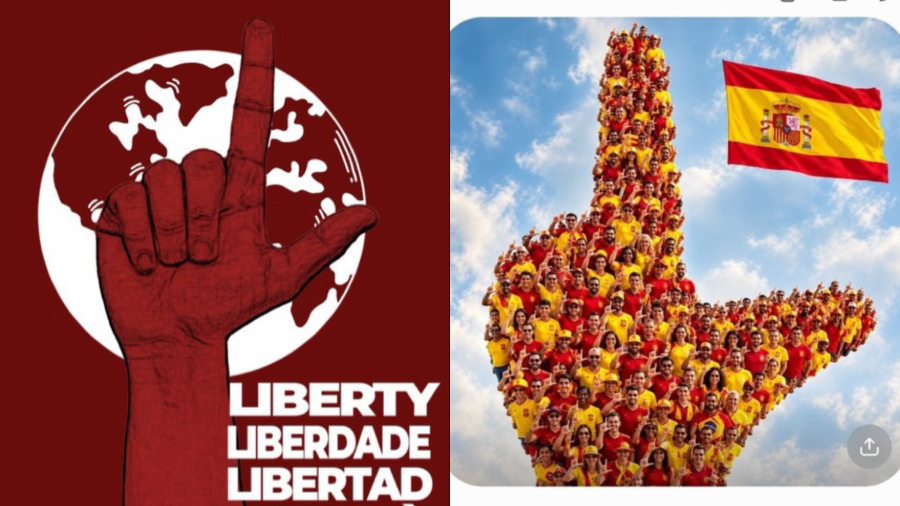
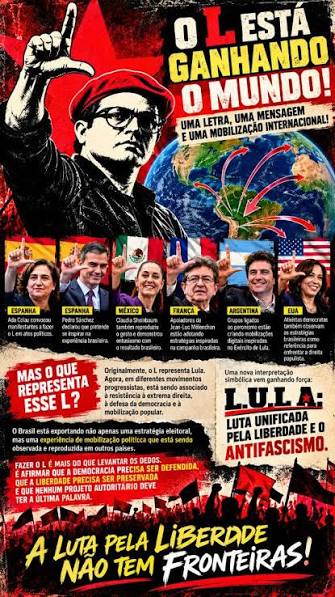
The military defeat against Iran and the collateral effect of the tariffs imposed by Trump on imported goods caused inflation to skyrocket in the US. The electoral defeat of Lula in Brazil is proving to be a watershed moment in halting the offensive of political manipulation by Latin American governments, initiated with the electoral fraud in Honduras and continued with the manipulation of Maduro in Venezuela. The conversion of Latin America into a colonial backyard can be stopped and defeated, not through class conciliation, not through a broad alliance with the right against the far right, not through capitulation to Trump’s ultimatums, but through the mass mobilization of the working class to defeat fascism and imperialism. Even the most conservative American voter dislikes voting for presidents who lead the country to defeat in the military and political adventures of the White House, even more so in unpopular wars like the one against Iran. Marco Rubio, the US Secretary of State, was pressured to swear that the White House did not aid in the illegal escape of Senator Flávio Bolsonaro, a fugitive from Brazilian justice, to the US. Netanyahu, supported by Trump and his family, has just been defeated by the opposition in the Israeli parliamentary elections. All of this adds to the immense internal popular discontent in the US, which tends to defeat Trump’s candidates for governor, senate, and Congress. In this context, Lula’s re-election gains immense international importance, and the “L” becomes a symbol of this rising resistance.
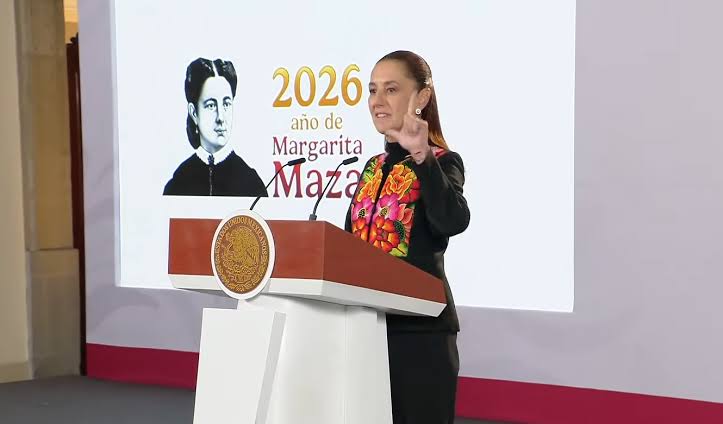
In the US, Mexico, Spain, France, Argentina, and Portugal—countries where the left is contesting elections in the coming period against the Trumpist far-right—the improbable and then inevitable victory of Lula represents “a breath of hope,” in the words of Claudia Sheinbaum, the Mexican president (shown below).
When commenting on Brazil’s international dimension, the former Portuguese prime minister paraphrased verses by Vinícius de Moraes to summarize the geopolitical significance of the national political process: ‘Brazilians, forgive me, but the world won the election.’ According to Sócrates, the strengthening of democracy in Brazil represented a decisive brake on the global wave of the far-right and the progression of international authoritarianism. He also pointed out that the multilateral balance of the planet and the leading role of the so-called Global South depend directly on Brazil’s active and sovereign presence in major forums, such as the BRICS bloc. (https://www.brasil247.com/entrevistas/o-presidente-lula-mostrou-ao-mundo-que-a-esquerda-sabe-governar-diz-jose-socrates/)
Lula’s improbable victory had several unprecedented, or at least very rare, achievements. Lula is one of the few presidents elected by popular vote for four terms, like F.D. Roosevelt in the USA. He is the first and only one of working-class and metallurgical origin to achieve this feat. He is the first presidential candidate in Brazil to be defeated in the first round and win in the second round, with the highest vote count in the country’s history, 64 million votes. The candidate of the Trumpist right, Senator Flávio Bolsonaro of the Liberal Party (PL), was victorious in the first round with 56.1 million votes and obtained 3.7 million more, 59.8 million votes in the second round. Even so, he was surpassed by Lula, propelled by the masses who secured him a fourth popular term.
All sectors of the oppressed and exploited population were terrified by the results of the first round, in which the candidates of the fascist right emerged victorious, both for president and for the National Congress, as well as the vast majority of governors. Immediately after Sunday, October 4th, the fascists began announcing the distribution of government positions and the unions began publicizing measures against the Brazilian working population, even before the election was over.
In a climate of “it’s already won,” fuelled by mainstream media, Mark Zuckerberg’s Meta, and the stock market boom, Flávio Bolsonaro’s economic team (composed of names like Daniella Marques, Luiz Felipe Trevisan, and Adolfo Sachsida) felt quite comfortable confessing their intentions in interviews, defending a robust fiscal adjustment plan—nicknamed the “sweep”—of up to R$ 250 billion in public investments. The team debated the elimination of the minimum percentages of revenue that the Union is legally obligated to allocate to health and education, opening the way for deep cuts in these sectors. The plan would mirror the “shock” model implemented by Javier Milei in Argentina, focused on the destruction of public services, a severe reduction in the size of the State, and Administrative Reform. The separation of the readjustment of retirement pensions, INSS benefits, and social assistance benefits (such as the BPC) from the value of the minimum wage was also discussed. Critics warned that this would freeze the purchasing power of more than 40 million beneficiaries who depend on the minimum pension. The plan’s progress indicated an aggressive resumption of the National Privatization Program, generating fears of the handover of strategic public assets and the loosening of environmental licenses to accelerate mining and oil exploration projects. Cuts of this magnitude would generate a sharp economic slowdown and unemployment in the short term. As household consumption accounts for about 70% of Brazil’s GDP, the decoupling of pensions and the slowdown in social investments would directly threaten domestic economic activity.
Still reeling from the defeat and fearing the return of Bolsonarism to government and power, a process of expanding popular demonstrations and mobilization unfolded, regardless of the Lula campaign leadership and the PT party. This began immediately with spontaneous student actions by young people and social movements that were not restricted to the traditional party structures of the PT, the most important party in the country’s history over the last 50 years, but constrained by a bourgeois leadership. A striking example was the “Youth in the Streets for Democracy” demonstration, which went from Candelária to Cinelândia in Rio de Janeiro, in addition to student actions at UFF in Niterói. International PT groups also organized demonstrations in cities abroad such as New York, Lisbon, Paris, and London under the slogan “Lula president, Lula world leader!”. Throughout the week, the movement grew in several cities across the country until it culminated in the massive mobilization on Paulista Avenue with Lula’s presence on October 11th, which brought together hundreds of thousands of demonstrators, politicians, artists, and influencers. Despite the inept leadership of the Workers’ Party, a digital strategy was devised to organize the popular spontaneity on social media. Digital tools and WhatsApp groups—such as the “Lula’s Army” channel, which gathered 10 million digital activists and was coordinated by Janones—scaled up online engagement, replicating videos, agendas, and “missions” to disseminate content beyond the traditional left-wing bubble.
Faced with electoral fatigue and the fear of losing votes in the final stretch of the second round, Flávio Bolsonaro himself and his aides changed their public tone in the last weeks of October. They began to modulate their discourse, classifying the benefit cuts as “fake news” and announcing a “package of goodies” (such as debt refinancing and tax breaks) to try to contain the damage and calm the electorate. But by then it was too late, the crime had already been revealed in advance and the damage had already been done.
The massive popular movement, unprecedented in several small inland cities and unseen for decades in capitals and larger cities, meant that the presence on the streets and on social media directly reflected in the reduction of abstention, which fell from 33,469,244 in the first round to 30,509,005 voters in the second round, a difference of more than 2.9 million people. From 21.08% to 19.22%, the lowest abstention rate in 20 years. In addition to the drop in absences, the second round also registered a decrease in the number of blank and null votes. In total, 1,430,496 voters cast blank votes, equivalent to 1.12%. In the first round there were 2,300,798 blank votes (1.84%). Null votes in the second round totalled 2,723,305, equivalent to 2.12% of the total. In the first round, there were 3,674,249 invalid votes, or 2.93% of the total. As a result, Lula, who trailed Senator Flávio Bolsonaro in the first round with 53 million votes, gained more than 10 million votes between the first and second rounds, reaching 64 million votes.
This movement influenced and was influenced by the victory for workers and the left in a decades-long struggle against employers and the right: the reduction of the weekly work schedule from 6×1 to 5×2 and from 44 to 40 hours. Shortly after the first round of voting, Congress approved a new Proposed Amendment to the Constitution (PEC) establishing the biggest change to the work schedule since 1988: the progressive reduction of the maximum weekly hours from 44 to 42 (expected to take effect approximately 60 days after promulgation, at the end of 2026) and to 40 hours per week in December 2027, sealing the end of the traditional 6×1 work schedule.
The results of the first round mobilized the population against the return of Bolsonaro.
The PL won six gubernatorial races in the first round, but did not win any in the second round. Even so, it emerged from the polls as the party with the largest number of governors, in addition to the largest blocs in the Chamber of Deputies (121) and the Federal Senate (19 elected this year). 23 governors are from the right or from parties of the Bolsonaro movement such as PP, PSD, Republicanos, MDB, Podemos, PSDB.
The PT only elected four governors (Bahia, Ceará, Piauí, and Rio Grande do Norte). In these states, just like Lula, the PT governors practice neoliberal policies and are sometimes more repressive than the right wing itself, as in the case of Bahia, where the military police kill more poor people than the police of right-wing governments (Reports on this from Piauí and Pública ).
The gravity of the threat that popular mobilization defeated.
If Flávio Bolsonaro (Liberal Party) were to win the elections, he would release a legion of coup plotters, annul Criminal Action 2668, for which [Jair] Bolsonaro was sentenced to 27 years and three months in prison, and Braga Netto to 26 years. He would release the coup-plotting generals who orchestrated Operation “Green and Yellow Dagger,” which planned to assassinate Lula, the vice-president, Geraldo Alckmin, and the Supreme Court Justice, Alexandre de Moraes. He would also pardon the mob that was arrested after the assault on the three branches of the Brazilian republic on January 8, 2023. He would also release banker Daniel Vorcaro, owner of Banco Master, the linchpin of the largest and most extensive corruption scheme ever revealed (traditional and larger banks certainly have larger and more shielded schemes), as well as his partners in various spheres of power and business, who would be released or have their cases dropped.
Legal experts and liberal analysts pointed out that Senator Bolsonaro’s proposals and statements represented institutional risks and an authoritarian drift aimed at undermining democracy and weakening the 1988 Constitution. The candidate explicitly stated that he intended to use the conservative majority elected in the Chamber of Deputies and the Senate to alter the Brazilian Constitution. Critics and opponents pointed out that the intention to rewrite or profoundly modify the constitutional text would jeopardize fundamental rights guaranteed within it. The unprecedented advance in the first round of the election of federal deputies and senators by the PL party further tilts the already reactionary and oligarchic Centrão bloc to the right. Now, these fascist-like parliamentarians will have even greater weight to extinguish various social and labour achievements, as well as to approve several laws attacking the working class. The new reactionary majority will also be able to more easily obtain the two-thirds majority of the 513 deputies, that is, the 342 votes needed to approve the impeachment of the president, as well as the simple majority of 41 of the 80 senators for the same process of removing the president from office, when it goes to the upper house of the legislature.
Had he been elected, in addition to being able to appoint up to four new judges to the Supreme Federal Court (STF), Flávio’s program included a strong “judicial reform” focused on limiting the power of the Supreme Federal Court. Among the proposed measures were the end of the STF’s original criminal jurisdiction to judge parliamentarians, the strict limitation of monocratic decisions, and changes to the rules for appointing new justices.
All this political power became ammunition for the fear of a return to Bolsonaro. Lula’s campaign began to denounce to those still undecided, those who had abstained or cast blank votes, the danger that the concentration of so much power in the hands of any government represented. It is estimated that up to 5% of Flávio’s electorate voted for Lula in the second round.
In a 2025 interview, Senator Flávio Bolsonaro mentioned the possibility of direct interference between the branches of government and the “use of force.” Flávio also announced plans for alignment with the international far-right, highlighting the promise to involve members of Donald Trump’s government directly in Brazil’s presidential transition, which was classified as a serious institutional threat and a threat to Brazilian sovereignty, practically reverting the country to colonial status, where the president would be a mere administrator handing over national wealth to the US. One of the main resources coveted today by imperialism and Big Tech companies are Brazil’s rare earth and niobium minerals.
Rare earth elements are 17 chemical elements essential for the production of super-magnets that are the basis of new technologies (cell phones, electric cars, drones). As far as research has shown, Brazil possesses 21%, the second largest reserve of rare earth elements in the world (the largest reserves are in China), and could have much more than that based on new research. Vietnam is in third place, with 17%. The USA possesses only 1%, as does Greenland.
Niobium is a critical and strategic mineral, essential for manufacturing stronger and lighter superalloy steels, turbines, rockets, and superconductors (used in magnetic resonance imaging machines). Brazil stands out because it holds approximately 98% of the planet’s economically viable reserves and dominates world production (operated mainly by CBMM in Araxá, Minas Gerais).
Government plans and guidelines associated with his platform included restrictions on academic freedom in universities. During the campaign, the opposition also denounced legal attacks against popular communicators and cultural pages on social media.
His government plan included an authoritarian shift in public security based on the model of Nayib Bukele (El Salvador), proposing the creation of mega-prisons with maximum security, chemical castration of rapists (his own vice-presidential candidate, Alfredo Gaspar, from the PL party, is the target of a request from the Federal Police to the Supreme Federal Court (STF) to investigate an accusation of rape of a vulnerable person), among other measures seen by human rights defenders as loopholes for the summary execution of prisoners.
In turn, the candidate was clearly identified with banditry in all its variations: fraud, receiving money from the arch-corrupt banker Vorcaro, kickbacks from parliamentary offices, money laundering, international prostitution and human trafficking networks, and liberalisation for the actions of paramilitary armies that are the militias. A bill (such as PL 3.723/2019) defended by the Senator, which alters the Disarmament Statute and proposes removing the mandatory identification numbering on ammunition casings purchased by security forces, greatly hindered the investigation of crimes and the illegal arms trade, making it difficult to trace the diversion of weapons from state arsenals to criminal factions and militias, in addition to hindering the investigation of crimes (as exemplified in historical cases such as that of Marielle Franco), scandalized the electorate. During debates in the election campaign, Flávio Bolsonaro downplayed the proposal and called the discussion about removing the numbering from the bullets a “minor detail”.
If Bolsonarism were to return to government, it would try to avoid all the “mistakes” that led to its loss by popular vote, that is, it would establish a dictatorship to perpetuate itself in power, it would institute torture, if necessary “killing 30,000,” as Bolsonaro has already declared (Senate) https://www2.senado.leg.br/bdsf/bitstream/handle/id/573673/noticia.html?sequence=1&isAllowed=ye, and it would establish “prisoner of war camps – CPGs,” as discovered in conversations between members of special army groups, the black kids. (https://oglobo.globo.com/politica/noticia/2024/11/27/militar-questionou-sobre-campo-de-prisioneiros-de-guerra-em-grupo-que-tratou-sobre-golpe-auschwitz-leia-mensagem.ghtml).
The difficulties in consolidating the fascist project in the age of financialization.
Trump and Bolsonaro are politicians who do not hide their desires to transform their governments into dictatorships, although they deny being characterised as fascists because it doesn’t fit with the reputation of fascism that imperialism itself built to legitimise itself and establish its doctrine of “defender of the free world” after World War II. Government and State are two different things. They instituted several measures in this direction, such as the immigrant hunting group, ICE (Immigration and Customs Enforcement, or U.S. Immigration and Customs Enforcement Service), a federal law enforcement agency linked to the U.S. Department of Homeland Security. But the aspirations of a government are not always executed or developed in the state it governs. Neither Trump nor Bolsonaro managed to transform the states they governed into fascist states. Less because the structural conditions of the era of financialization of the imperialist economy do not allow it, than because of the desire of the mafia gangs that administered and administer the White House and the Planalto Palace. We developed this explanation in “Neoliberalism, neofascism and financialization – Could the neoliberal state evolve into a neofascist state?”
The communist revolutionary Leon Trotsky, who analysed the rise of Nazi-fascism in his time, explains both the essence of fascism and how a state becomes fascist:
“From fascism the bourgeoisie demands a thorough job; once it has resorted to methods of civil war, it insists on having peace for a period of years. And the fascist agency, by utilizing the petty bourgeoisie as a battering ram, by overwhelming all obstacles in its path, does a thorough job. After fascism is victorious, finance capital directly and immediately gathers into its hands, as in a vise of steel, all the organs and institutions of sovereignty, the executive administrative, and educational powers of the state: the entire state apparatus together with the army, the municipalities, the universities, the schools, the press, the trade unions, and the co-operatives. When a state turns fascist, it does not mean only that the forms and methods of government are changed in accordance the patterns set by Mussolini – the changes in this sphere ultimately play a minor role – but it means first of all for the most part that the workers’ organizations are annihilated; that the proletariat is reduced to an amorphous state; and that a system of administration is created which penetrates deeply into the masses and which serves to frustrate the independent crystallization of the proletariat. Therein precisely is the gist of fascism …” (https://www.marxists.org/archive/trotsky/works/1944/1944-fas.htm#p2).
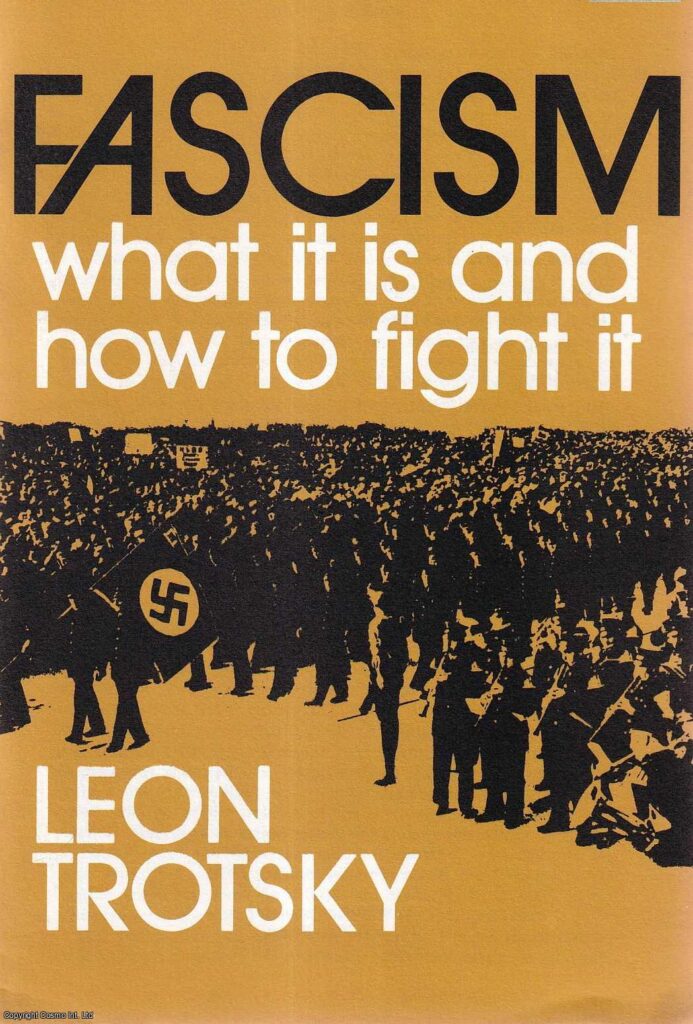
Thus, it becomes clear that neither Trump nor Bolsonaro, and even less so the other contemporary versions of the international fascist movement, achieved what Mussolini, Hitler, Franco, Salazar, or Tojo achieved in their time.
The Bolsonaro family was defeated in the presidential elections, but Bolsonarism, as a far-right fascist movement, did not suffer a decisive political defeat. It will continue to influence national politics in favour of the most radical interests of big imperialist capital and its local partners. Immediately after the second round, it unleashed a reprisal against workers who voted for Lula, indigenous people, women, and LGBTQ+ individuals, with dismissals, evictions, threats, physical assaults, terrorist attacks, and dozens of murders in a McCarthyist and criminal ideological persecution. Fascism must be crushed by the upcoming anti-fascist and anti-imperialist struggles.
We believe that the historic mass uprising of workers in the form of Lula’s electoral campaign, which occurred in this second round, will not allow the setbacks sought by those defeated in the presidential elections, but victorious in the parliamentary elections. This movement of the working class may still achieve new gains, such as zero fares on public transport (not just on weekends), an achievement that should have been defended by the PT governments in 2013 and that could have thwarted the growth of the right wing from then on and the entire subsequent coup process, supported by popular frustration with the PT. From 2013 to 2026, more than 150 cities in the country have already established zero fares on public transport.
The working class has been learning to take advantage of the class struggle, even when fighting on enemy territory. It has been achieving victories in extremely difficult situations and unexpected triumphs, both in bourgeois elections and on social media manipulated by Big Tech, where, despite all the political limitations of this enlistment, it participated in a disciplined and centralized manner in the “Lula’s Army” to mitigate the disproportionate nature of the struggle in this arena, contain fake news, and spread information relevant to Lula’s campaign and to Federal Deputy André Janones of the Rede Sustentabilidade party. The workers achieved a major electoral victory, a turnaround victory coupled with a historic labour victory, with a reduction of 4 hours of work per week, something not seen since the 1988 Constitution, when the workweek was reduced from 48 to 44 hours. Despite the obstacles, the precariousness of labour relations, and the class conciliation policy that, to some extent, fosters frustration and recruitment into anti-PT sentiment among workers, the working class has achieved economic gains in recent years, such as reduced unemployment and complete exemption from income tax for those earning up to 5,000 reais, a bracket that covers 90% of the salaried population. Furthermore, despite a parliamentary majority in both houses of Congress, the demoralization caused by the imprisonment of the father, Jair Messias, and the flight of the Bolsonaro sons (Eduardo and Flávio) to the USA, as well as the contradictions and disputes over Bolsonaro’s political capital, should weaken the right wing for a brief and imminent period.
The sheer size of the popular mobilization in Brazil disrupted and thwarted the ongoing coup, orchestrated between the White House, Meta, the Superior Electoral Court, the anti-PT right wing, the mainstream media, and research institutes that were prepared to do in Brazil what they did in seven other countries on the continent. The spontaneous struggle went far beyond the leadership of the traditional Brazilian left, incorporating thousands of people into political activism in this second round. However, spontaneity, dispersion, or merely virtual activity will not be enough to ensure the defeat of coup and impeachment attempts that representatives of Trump or another imperialist ruler may try to impose in the future. It is necessary to organize popular discontent and contest the direction of the PT itself, using this victory as leverage for the continental defeat of imperialism, for the unity of the peoples to crush its fascist creation, and to continue the struggle for socialist revolution in Brazil and the world.