(From the Brazilian Section of the LCFI)
For Marxists, participation in bourgeois elections has always been a tactical issue. However, while for most of the left, electoralism is their raison d’être, for a minority influenced by leftist and anarchist ideas, casting a blank vote or boycotting elections is also an existential principle, a testament to being “revolutionary.”
Bourgeois elections have existed since at least the 19th century. Democracy, since the advent of the Athenian Ecclesia (popular assembly) with Solon, and the Roman Republic in 509 BC. Therefore, this dimension of politics, where the interests and representations of the dominant classes predominate, in Brazil and in the world, is not a new problem for Marxism, the science of the struggle for the emancipation of the proletariat.
Karl Marx and Friedrich Engels
Marx and Engels witnessed several bourgeois elections. Unlike most anarchists (some consider the current situation and therefore oppose adopting abstentionist positions), Marxists do not advocate abstention or casting a blank vote in bourgeois elections. Karl Marx saw bourgeois elections as a limited instrument of the capitalist state, serving primarily for the bourgeoisie to manage its affairs and maintain power. However, he did not advocate abstention; he considered elections a secondary battleground for strengthening class consciousness, conducting revolutionary propaganda, and, when possible, winning seats in parliament to defend workers’ interests.
In 1864, Marx wrote a letter on behalf of the IWA (First International) congratulating Lincoln on his re-election. Despite considering him a representative of the bourgeoisie, Marx saw Lincoln as an honest leader capable of guiding the country to relative historical progress through industrialization in the northern US and the Union’s victory in the fight against the pro-slavery reaction of the South.
The participation of communist parties in bourgeois elections was seen as a way to bring the communist program to a wider audience and test the party’s strength. The classic Marxist position is not one of contempt, but of instrumental use of elections for revolutionary organization, without creating democratic illusions that the bourgeois state can be reformed to serve the workers.
In 1850, Marx and Engels, in their “Message from the Central Committee to the Communist League,” explained:
“The proletariat must ensure that everywhere, alongside the bourgeois democratic candidates, working-class candidates are proposed, as far as possible from among the members of the League, and that all possible means are used to elect them. Even where there is no hope of success, the workers must present their own candidates, to maintain their democracy, to maintain their autonomy, to gauge their strength, to bring their revolutionary position and the party’s views to the public.”
VI Lenin and the Bolsheviks
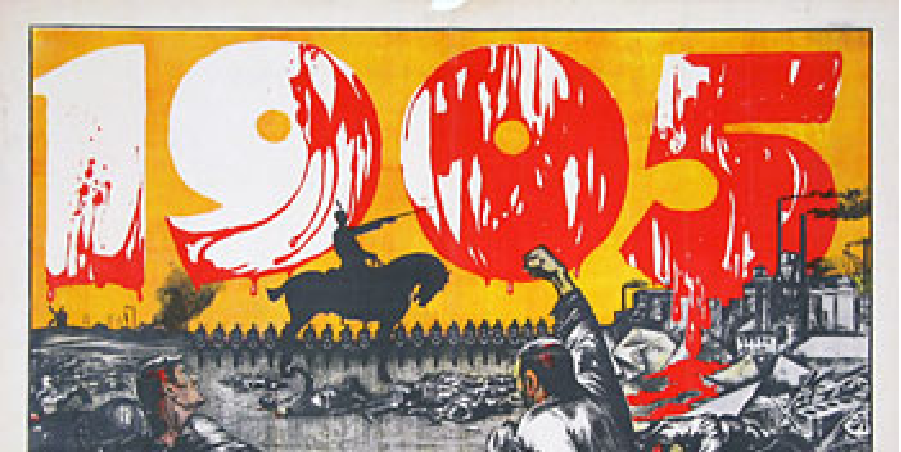
Although Lenin considered bourgeois elections a rotation of exploiters and oppressors in power, the Bolsheviks only advocated boycotting the national parliamentary elections (of the Duma) in 1905, during a period of revolutionary agitation in the Russian political landscape. At that time, workers possessed dual power structures, the soviets, workers’ and people’s councils; the Social Democratic Labour Party (Bolsheviks and Mensheviks) was illegal and could not field candidates; and the assembly of elected federal deputies was not deliberative, but merely consultative, thus being used by the Tsar to divert the popular momentum of the 1905 revolution. However, after that year, when the revolutionary political situation had already dissipated, the Bolsheviks participated in the Duma elections under the Tsarist dictatorship.
In opposition to the sectarians who admired the Bolshevik revolutionaries but veered towards leftist political positions in the Third International, Lenin wrote, in 1920, the booklet “Left-Wing Communism: An Infantile Disorder.” The main leader of the Bolshevik revolution rebutted the German “left-wing” communists, who advocated boycotting parliamentary elections, considering that communists should not participate in the bourgeois Parliament, a politically outdated and obsolete institution.
“As is natural, for the communists in Germany, parliamentarism has become ‘politically obsolete’; but the point is precisely not to assume that what is obsolete for us has become obsolete for the class, for the masses. Once again, we find that the ‘leftists’ do not know how to reason, they do not know how to conduct themselves as the party of the class, as the party of the masses. Your duty is not to descend to the level of the masses, to the level of the backward sectors of the class. This is not debatable. You have an obligation to tell them the bitter truth: to tell them that their bourgeois-democratic and parliamentary illusions are nothing more than that: illusions. At the same time, however, you must calmly observe the real state of consciousness and preparedness of the entire class (and not just its communist vanguard), of the entire working mass (and not just its advanced elements).”
In 1920, the Second Congress of the Third International was also held. At that time, revolutionaries considered it an obligation for communists to use the platform for public speaking, even though they placed no illusions in it.
“Communist deputies are obliged to use the parliamentary platform to unmask not only the bourgeoisie and its official lackeys, but also the social-patriots, the reformists, the centrist politicians and, in general, the adversaries of communism, and also to widely propagate the ideas of the Third International; communist deputies, even if only one or two, are obliged to challenge capitalism in all their actions and never forget that only those who reveal themselves not verbally, but through actions, as enemies of bourgeois society and its social-patriotic servants are worthy of the name of communist.”
Karl Liebknecht
Unlike the German “left communists,” a leader of the internationalist wing of social democracy carried out a new type of parliamentary activity. Karl Liebknecht was elected in 1912 to the seat of Potsdam-Spandau-Osthavelland by the SPD , the German Social Democratic Party . On December 2, 1914, “even though he was alone” (in the face of the nationalist betrayal of his SPD colleagues), he voted against a second war budget for the army in the German Parliament ( Reichstag) , arguing against the imperialist nature of the First World War and defending the principles of proletarian internationalism.
Liebknecht continued to expose the Krupp scandals , showing that arms companies were bribing officials in the War Ministry. In 1916, he was the only member of parliament to speak out against the Armenian genocide and continued to denounce German war policies. Due to his outspoken opposition, he was arrested for “high treason” in 1916 and lost his immunity. Liebknecht was released in 1918, founded the Spartacist League, and was assassinated in 1919, along with Rosa Luxemburg.
Antonio Gramsci
Gramsci helped found the Italian Communist Party (PCI) in 1921 in the city of Livorno, as a section of the Third Communist International. The PCI was born from a split in the Italian Socialist Party at its 17th Congress. At the PCI’s founding, the majority of the party belonged to an abstentionist faction, led by Amadeo Bordiga, but Gramsci was elected to the Central Committee of the new party. For the Italian communist, in Russia, “in the East,” the “war of maneuver” was victorious, referring to the Bolshevik revolution of 1917, but this concept could be extended to the Korean, Chinese, and Vietnamese revolutions. Gramsci emphasized that in the West, where civil society possessed a robust structure, the “war of position” should prevail so that communists could conquer civil society before seizing political power.
This does not mean that elections are the ultimate goal, but rather a terrain of political and ideological dispute within the context of the struggle for cultural hegemony over society. Cuba, due to the particularities of its class struggle, was the only exception in the West to carry out a social revolution, that is, the conquest of political power through “war of maneuver”.
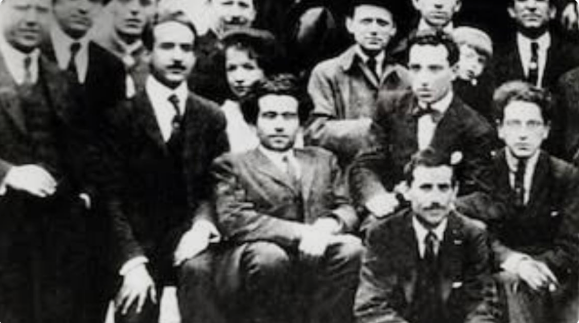
The Italian thinker was elected deputy in 1924. On April 6th of that year, 15 communist deputies were elected in Italy, obtaining 304,719 votes, representing 4.6%. Gramsci was elected even though he was outside the country. He was in the USSR, representing the Italian Communist Party (PCI) in the Communist International (Comintern), and even so, he obtained 1,856 votes for the Veneto district. Taking advantage of parliamentary immunity, he returned to Italy the following month. In his work, Gramsci used parliament to criticize the bourgeois state and disseminate socialist ideas, even after the fascist seizure of power. On October 28, 1922, the March on Rome by the fascists, led by Benito Mussolini, took place.
Gramsci viewed parliament as a space for the workers’ party (the ” modern prince “) to educate the working class, win minds, and build collective will, focusing on “grand politics” and structural transformation, not merely on occupying positions, the opportunistic and careerist “petty politics.” ” The party is the best form of organization, and unions and councils are intermediate forms of organization, in which the most conscious members of the proletariat position themselves in the struggle against capital ” (L’Ordine Nuovo, 1921). Elections would be an important moment, but not the only one, in the class struggle to contest and influence civil society and build cultural hegemony. The political party, for Gramsci, is a “collective intellectual” that must promote intellectual and moral reform, overcoming the immediate interests of “petty politics.”
Gramsci emphasizes the need for a strategic, long-term vision in the class struggle, through the “war of positions” for the contest of cultural and political hegemony. Therefore, bourgeois elections are not isolated, isolated events that occur every two years (in Brazil), but part of a permanent struggle that takes many forms—union, parliamentary, direct—for the conquest of power for the workers, where the parties and movements of the working class must organize civil society in favor of the immediate and historical interests of their class, they must train leading political cadres, territorial leadership, by workplace, in the construction of networks of mutual support for a long-term struggle.
Leon Trotsky
One of the main leaders of the Bolshevik revolution and a theorist of Marxism, he devoted considerable attention to the debate on the participation of communists in bourgeois elections. Just as Lenin saw a strain of sectarians growing among the international supporters of Bolshevism, Trotsky also identified the growth of a leftist lineage within the ranks of his Fourth International, a lineage that has become dominant among organizations that claim to be Trotskyist today. The analyses of the founder of the Red Army led him to a firm position against abstentionism and null votes, considering them tactics detrimental to building the revolutionary struggle.
Trotsky vehemently criticized the idea that revolutionaries should completely abstain from participating in elections. For him, this stance, known as abstentionism, was a mistake that demonstrated weakness and a misunderstanding of the dynamics of class struggle. In a 1931 text on Spain, Trotsky argues that if communists “turned their backs on the Cortes (a type of Spanish parliament in the early 1930s), opposing them with the slogan of the soviets and the dictatorship of the proletariat, they would only demonstrate that they cannot be taken seriously .” He advocated using elections and parliament as a platform for propaganda and agitation to dissipate the illusions of workers in their socialist leaders, “demanding things from the government. It is their leaders who are in it…” without ever losing sight of the ultimate goal of the revolution. Electoral participation was, therefore, a tactical means of reaching the masses and exposing the contradictions of the capitalist system.
“If the communists, at this stage, were to turn their backs on the Cortes, opposing them with the slogan of the soviets and the dictatorship of the proletariat, they would only demonstrate that they cannot be taken seriously. There is probably not a single communist in the Cortes (this is the information transmitted by the Turkish telegrams). It is clear that the revolutionary wing is always stronger in action, in struggle, than in parliamentary representation. But even so, there is a certain relationship between the strength of the revolutionary party and its representation in parliament. The fragility of Spanish communism is perfectly evident. Under these conditions, to speak of the overthrow of bourgeois parliamentarism by the dictatorship of the proletariat would simply be to play the role of imbeciles and chatterboxes. The task is to strengthen the party in the parliamentary phase of the revolution, mobilizing the masses. Only in this way can parliamentarism be overcome. But precisely for this purpose it is indispensable to develop a fierce agitation under the most decisive and extreme democratic slogans.”
What should be the criteria for launching slogans? On the one hand, the general direction of revolutionary development, which determines our strategic line; on the other, the stage of mass consciousness. The communist who does not take this latter factor into account will complicate matters. Let us reflect a little on how the Spanish workers, en masse, view the current situation. Their leaders, the socialists, hold power. This increases the demands and tenacity of the workers. Every striker will conclude that the government should not only not be feared, but, on the contrary, should be expected to help. The communist must direct the workers’ thinking precisely in this direction: “Demand things from the government. It is your leaders who are in it.” The socialists, in response to the workers’ delegations, will claim that they do not yet have a majority. The answer is clear: with a truly democratic electoral right and the rupture of the coalition with the bourgeoisie, a majority is assured. But this is what the socialists do not want. The situation in which they find themselves contradicts the slogans of a full democracy. “If we simply oppose the Cortes, the dictatorship of the proletariat, or the soviets, we unite the workers with the socialists, for both will say: ‘The communists want to rule us.’ Already under the banner of democracy and the separation between socialists and bourgeois, we foment the split between workers and socialists and prepare the ground for the next stage of the revolution.” ( Leon Trotsky, Spain : Tactics Arising from Electoral Results, July 1, 1931 ).
For Trotsky, ” revolutionary abstentionism ” would be a misguided tactic. Although some contemporary Trotskyist groups advocate null votes, abstention, or boycotts of any and all bourgeois elections as a form of protest, Trotsky’s position was quite different. In a 1939 letter, he criticizes the proposal of “revolutionary abstention” in municipal elections, made by a militant named Vereeken, considering it ” extravagant nonsense ” and a tactic that confused intransigence on small issues with opportunism on large ones.
“It is with immense satisfaction that we, here in Coyoacán, read the declaration of the councilors of Flénu, members of the PSR . Bravo! In this moment of retreat, cowardice, and confusion, their two magnificent declarations bring true comfort to every true revolutionary. Poor Vereeken, who never misses an opportunity to commit some extravagant gaffe (very “intransigent” on small issues, very opportunistic on large ones, like Spain and France), proposed “revolutionary” abstention in the municipal elections. Even without any other result of electoral participation besides their two declarations, Marxist politics would already be fully justified, if it ever needed further justification.” ( Leon Trotsky: Letter to the Socialist Party, February 12, 1939 ).
Revolutionary abstentionism, which finds some adherents among sectarian Trotskyists of yesterday and today, is a way of abdicating the responsibility of intervening in political reality, leaving the field open for the bourgeoisie. Instead of withdrawing, the revolutionary should actively participate to denounce the electoral farce and build an independent alternative.
Trotsky’s defense of electoral participation did not signify adherence to the system, but rather a strategy to use it as an instrument of struggle. He believed that participation in elections allowed for: Propaganda and agitation: The electoral platform offered a unique opportunity to disseminate socialist ideas and denounce the evils of capitalism to a wider audience; Organization of the working class: Electoral campaigns forced the organization and mobilization of militants, strengthening the party and its ties with the masses; Experience and rupture with social democracy: Participation in elections allowed for the exposure of the betrayal of social-democratic and Stalinist parties, which collaborated with the bourgeoisie and diverted the revolutionary struggle; Preparation for revolution: The electoral experience, although limited, served as a school of politics for the masses, helping to unmask the deceptive nature of bourgeois democracy and prepare the ground for the socialist revolution.
In short, we deny that Marx, Engels, Lenin, or Trotsky ever advocated revolutionary abstentionism, null votes, or anything similar. Marxists see abstentionism and null votes as tactics that ultimately weaken the revolutionary movement. They advocated participation in bourgeois elections, but always as a tactical tool subordinated to the strategic objective of the revolution. Preferably, this participation should be through their own parties and candidacies, followed by reformist candidacies supported by the vast majority of workers. Electoral participation should serve to build class consciousness, organize workers, and expose the corrupt nature of the system, never to legitimize it or seek reforms within its limits. For Trotsky, true social transformation would come from direct action and the revolutionary struggle of the masses, not from the ballot box, but the organized force capable of seizing power would need to go through various experiences capable of overcoming the majority illusions in reformist organizations.
The Communist League’s position in 2022 :
Below, we reproduce the electoral position adopted by the Communist League (the predecessor group to Emancipation of Labor) 4 years ago, when we were part of a progressive mass movement that prevented the re-election of the fascist Bolsonaro. Even though this puppet of big finance capital, imperialism, and a broad coup front carried out numerous stratagems to impose himself, managing, despite his government’s responsibility for the 700,000 deaths of the pandemic, as an example of his numerous crimes, to obtain 400,000 more votes in 2022 than in 2018, the organized force of the population gave the PT candidate 60 million votes, the highest vote count for a president in the entire history of Brazil.
Although we knew and even anticipated that Lula tended to frustrate the expectations of the masses who longed to sweep away Bolsonaro’s policies, his coup-mongering, and his legacy of fiscal reforms, privatizations, and counter-reforms, it was right to follow the political evolution of the proletariat’s consciousness while Lula’s victory interrupted the offensive against labor and social rights, the times of hunger and long lines for food, and the fascist escalation. Thus, we said at the time:
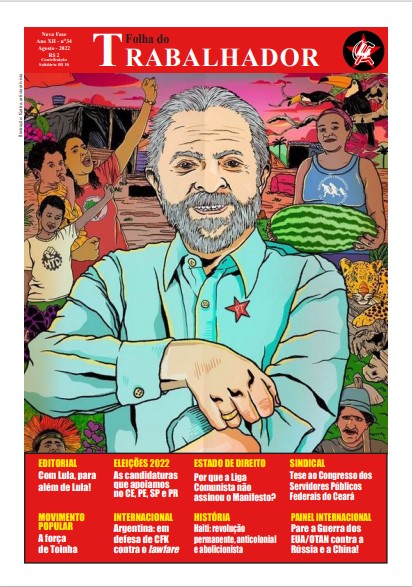
“We start from a basic truth: it is the organized masses of millions who will bring about the transformations that Brazil needs. That is why we stand with the millions who will vote for Lula, following his political evolution.”
Therefore, it is a sectarian error to defend the null vote as if it were something revolutionary. In the current situation, it is nothing more than a marginal participation in the electoral process, typical of groups without dialogue with the masses, marginal nuclei of academic intellectuals, and anarchist groups without social weight. Likewise, the candidacies of the PSTU, PCB, and UP are a sectarian error, as they cannot even form a united electoral front, remaining invisible to the working class.
However, voting for Lula does not mean capitulating to the reformist strategy of a broad front with the coup-plotting business sector and imperialism. These sectors will never accept measures such as agrarian reform, national sovereignty, renationalization, price and rent freezes, strengthening public health and education, repeal of spending caps, and nationalization of the financial system, for example.
Communists participate in the electoral struggle as long as the masses lack sufficient awareness and organization to build their own power structures capable of overcoming the bourgeois state through socialist revolution. In the current situation, the Communist League supports candidates for state/federal deputy in São Paulo, Pernambuco, Paraná, and Ceará with the aim of strengthening the united front against the bourgeoisie and imperialism. It is a way of dialoguing with the most politically aware sectors of our class.” (Editorial of FT34: With Lula, against Bolsonaro! Beyond Lula, against the broad front with the coup-plotting business class!)
In short: the Marxist tradition of almost two centuries has nothing to do with sectarian abstentionism. The Bolsheviks only boycotted bourgeois elections once, and rightly so, during a revolutionary process in 1905. But it is pure leftist naiveté to believe that a boycott, in itself, defended permanently and independently of the political conjuncture, can generate some kind of revolutionary situation, a shift in political consciousness, or cause the masses to follow the boycotters. Furthermore, Marxists are obliged to participate in bourgeois elections precisely to contest the consciousness of the workers in this inhospitable terrain, because most of the time, the thinking of the dominant classes is the dominant thinking in the dominated class, and the working population places illusions in the democracy of the rich.
Thus, the tactical question of participation in bourgeois elections must obey conjunctural mediations. This is even more so when the threat grows on the regional horizon, not of socialist revolution, but of Trumpist coups, of fascist counter-revolution, since fascism is a bourgeois party with mass influence, capable of mobilizing them against other workers and the left. Hence the importance of electoral polarization for recruiting and organizing the left-wing sectors of the working class.
Currently, Flávio Bolsonaro’s candidacy is supported by a broad front of the national ruling classes and by a declining imperialism, which is retreating from its global domains in the face of the growing geopolitical influence of the China-Russia-Iran axis, but seeks to refocus on the American continent. This situation demands the tactic of a united anti-fascist and anti-imperialist front to mobilize the population for struggle in the streets, economically, and also in the electoral arena. Therefore, the first part of the electoral conference of the Emancipation of Labor Group unanimously decided to support the Workers’ Party’s candidacy for the presidency of Brazil in 2026.