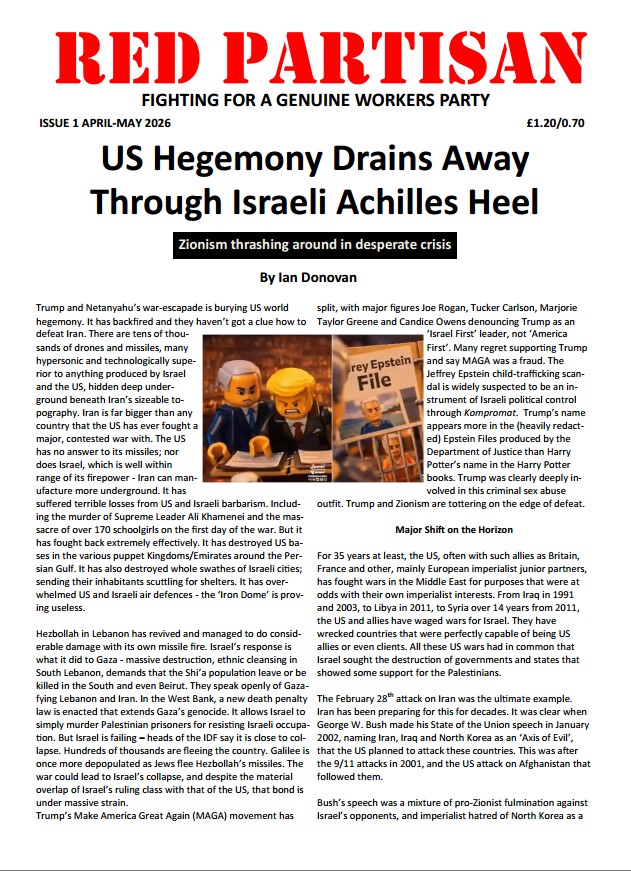
In the context of Chris Williamson’s break with George Galloway’s Workers Party over his attempt to stand in Holborn and St Pancras, it would be wrong for the left to simply back Polanski. The left should at least place demands on him as a condition for any support. This motion, which was moved in Croydon Your Party the other week, put forward a correct perspective:
“The prospect of the Green Party leader, Zack Polanski, standing for the Greens in the seat vacated by the former PM, genocidal Zionist and enemy of socialism, Kier Starmer, and the failure of Your Party, or the socialist left, to be in a position to challenge for Starmer’s seat, is a major political defeat.
“It cannot be repaired by simply trying to jump on the political bandwagon of Polanski and his non-socialist non-working-class party, and hoping for some later improvement in our fortunes.
“Your Party needs to sort out its internal functioning, its democracy and its commitment to basic working-class politics, or else we face extinction.
“We should not automatically extend electoral support to Polanski. We should demand three conditions for electoral support.
(a) a clear statement from the GP that the root cause of the environmental crisis their party was set up to address, is capitalism, which therefore needs to be abolished.
(b) That Zack Polanski and Your Party should issue a statement jointly defending Diane Abbot against the renewed witchhunting of her in the Labour Party, for her justified attack on NATO aggression as the cause of the war in Ukraine.
(c) That the Greens should jointly with us and others in the labour movement, launch a trade union and community-centred campaign against the environmentally ruinous plans for AI Data Centres in numerous parts of this country. And to encourage similar activities internationally.
This motion should be sent to the CEC for their attention.”
The reason for this is that, thanks to the misleadership and gross bureaucratism of Jeremy Corbyn, tens of thousands of socialist-minded militants, who were originally supportive of Your Party, were driven away and joined the Greens, attracted by Zack Polanski’s left-wing rhetoric particularly over Palestine. Our job is to formulate tactics to bring those people to the fore, and to put this pro-socialist and working-class cohort in command. That will inevitably mean a split – whether by these militants splitting away themselves, or the traditionalist right-wing being driven out, is not clear. But we cannot ignore this crucial element in British left politics, and it necessary to formulate tactics to address it. Galloway’s candidacy is not supportable, not because of his correct view of Ukraine and Gaza, but because of his anti-migrant chauvinism and anti-LGBT demagogy which is simply reactionary.
The coup within Labour between the disastrous May Labour Party Council Election results and July, when Andy Burnham became Prime Minister, was carefully choreographed. Burnham’s seat in Makerfield was ‘kindly’ donated by Josh Simons, a stalwart of Labour Together and the operation against Corbyn, which shows who is really behind Burnham’s ascent to office. It was clearly arranged and planned by the same Labour Together outfit (now renamed ThinkLabour), largely Zionist funded, that worked extensively behind the scenes to foment witchhunts against the left for supposed ‘anti-Semitism’ during the Corbyn period, to destabilise Corbyn’s leadership, and to engineer a major election defeat by manipulating the issue of Brexit. This produced the Starmer regime, with its war against the mass left-wing movement that formed behind Corbyn in the mid-2010s ,and especially the half-million or so socialists who joined Labour when Corbyn became leader, making it (then) the largest political party in West Europe. Hundreds of thousands of members were driven out by Starmer’s bloodletting of the left between 2020 and 2025. Labour under Starmer, supposedly the party of the broadly working-class, left-wing of British politics, in government acquired a terrible reputation for hypocrisy. It engaged in a whole array of attacks that even the Tories had not dared, Including vicious attacks on Winter Fuel payments for pensioners, attacks on the disabled, further privatisation of the NHS. They also insisted on keeping to hated Tory policies such as the two-child benefit-cap. Starmer pushed far right anti-immigration politics himself with his ‘island of strangers’ speech in May 2025, echoing the racism of Enoch Powell.
Andy Burnham’s Labour leadership and premiership is an attempt to give the failing Labour government a facelift, to boost its pathetic popularity, and avoid what appeared to be an inevitable future collapse, given Starmer’s complete political failure to generate any popular resonance or sympathy whatsoever. Burnham was Mayor of Greater Manchester from 2017 to his recent return to parliament in June. He has some real charisma and popularity, and is attempting something that resembles the early years of Tony Blair’s premiership, when Blair combined neoliberal politics with liberal populism, and maintained a strong degree of popular support for several years. Blair’s political ‘honeymoon’ as Prime Minister extended for the whole of his first term from 1997-2001, and did not definitively end until he joined with George W Bush in 2002 in the campaign to attack Iraq. The recreation of that kind of ‘honeymoon’ appears to be the strategy of those behind Burnham’s rise, to salvage Starmer’s government from the odium of Starmer himself. And so far, it seems to be working, as Nigel Farage’s Reform, who before Burnham’s ascent had been leading in opinion polls, is now reckoned to be in either second or third place.
This has been aided by the systematic exposure of Farage’s own corruption with the receipt of first £5 million from Thailand-based tax exile and crypto billionaire Christopher Harborne, and then £36 million from Bel Delo, who had previously been pardoned by Trump after being convicted of money laundering. This amount was then matched again by Harborne, giving Farage a cool £72 million. These sums dwarf the hundreds of thousands that were unlawfully funnelled to Labour Together for the war against Corbyn. Burnham is now planning retrospective laws to ban such donations. But this has discredited Farage massively by associating him with big money corruption. In response to this fall in popular support, the far right, this time led by Daniel Thomas (“Danny Thommo”), an associate of Stephen Yaxley-Lennon (“Tommy Robinson”) launched mobs of balaclava-masked ‘protesters’, first to block the port of Dover in a 5 September ‘protest’ against small boats and asylum seekers. Then on 11 Sept, there was another masked action in Portsmouth, this time directed against the RNLI lifeboat service, for rescuing asylum seekers in small boats, as well as against a Pakistan Cricket Team they accused of being asylum seekers. Burnham’s government is moving to ban such balaclava masks, popularly lampooned as ‘nonce masks’ in response. All this is a legacy of the Starmer regime’s appeasement of the far right.
The Starmer’s government’s odious authoritarianism made it acutely unpopular on the left wing of British politics, and it would never, no matter how much it grovelled and dressed up in far-right clothes, be able to satisfy the far right who were emboldened by it. Burnham is a rhetorical critic of neoliberalism who says that British politics has been on the ‘wrong track’ since Thatcher and claims to want to return to the 1970s before Thatcher’s neoliberal offensive. As Manchester Mayor he implemented municipal ‘control’ (not ownership) of bus services and he claims that this is a start of his return to the 1970s. He is a political chameleon – he was broadly speaking a Blairite/Brownite as a previous minister, but during the Corbyn period, he conspicuously refused to resign from Corbyn’s Shadow ministerial team when all the Blairite politicos did so as a unified tactic to try to bring down Corbyn in the 2016 ‘Chicken Coup’. He thus has a different reputation, which is captured in a popular joke about him: “A Blairite, a Brownite and a Corbynite walk into a bar, and the barman says: ‘What would you like to drink, Mr Burnham?’”.
Starmer: Labour’s Foulest Premier by a Country Mile
Starmer became certainly the most hated Labour Prime Minister in history within weeks of being elected with a massive majority in July 2024 – rightly seen as arrogant, ultra-reactionary and completely lacking any charisma and empathy by the population of left and right. His massive parliamentary majority was a freak, caused by the collapse of the Tory vote with a substantial chunk of their voters going to the hard-right Reform party of Nigel Farage. The Tories’ percentage of the popular vote fell from 43.6% in 2019 to 23.7% in 2024 – a huge collapse. But Labour’s only rose slightly, from 32.1% in 2019 (when they lost heavily) to only 33.7% in 2024. Starmer won a massive majority with fewer votes than Corbyn lost with previously. Corbyn lost with 10,269,051 in 2019; Starmer won with 9,708,716 in 2024 – more than half a million less. This was not a popular victory at all, but a quirk of the First Past the Post electoral system: in 2024 Reform got 14.3% of the vote, coming third. Which means that Starmer’s massive majority was built on sand – his popular base was minimal, and he was challenged from the get-go, within a matter of a few short weeks of being elected, by a broad far right movement centred on Reform. This went into overdrive with aggressive, threatening demonstrations outside hotels housing asylum seekers in the summer of 2024, repeated even more menacingly in 2005 with the nationwide fascist campaign of putting Union Flags on lampposts and painting roundabouts with the Cross of St George, aimed at threatening and intimidating ethnic minorities. Then followed by a half-million strong London ‘Unite the Kingdom’ fascist march in September 2025. This was countered and fought against by the left outside Labour. Starmer had no discernible political ‘honeymoon’ after he was elected, simply because his leadership was overtly reactionary and pusillanimous before big capital right from the very start.
The reactionary character of Starmer’s government is shown by its attitude to two crucial war questions: Gaza and Ukraine. Nine months before Starmer’s government was elected, in the days after the Al Aqsa Flood Hamas-led breakout on October 7th, 2023, Starmer made it quite clear that he supported the genocidal response of the Israeli government as laid down by defence minister Yoav Gallant’s statement that Israel were fighting ‘human animals’ who would be deprived of food, water and fuel therefore. When challenged by LBC’s Nick Ferrari in an infamous interview on 11th October 2023, about whether Israel had the right to withhold food and water from the Gaza population, Starmer clearly said that they “have that right”. Which put him clearly in the genocidaire camp. The draconian repression Starmer’s government has carried out against the movement against this genocide has far exceeded that of the Tories, from restrictions on marches and frameups of Palestine Solidarity activists and the fraudulent proscription of Palestine Action, attempts to abolish jury trials and interference with existing jury trials by pro-genocide Judges clearly acting on government instructions. Much more so than Sunak’s earlier government, Starmer’s was a repressive pro-genocide regime, and many of its measures the kind of thing that Suella Braverman, the proto-fascist chief Zionist in the previous Tory government , was forced from office for trying to enact. Braverman then defected to Reform.
On Ukraine, likewise Starmer had always been one of the most fervent Russophobes and militarists in the Labour Party political class going back to the early days of the Maidan regime, when he first became a Labour MP in 2015. The Stop the War Coalition, after the beginning of the Russian Special Military Operation in the Eastern half of Ukraine in February 2022, produced a statement whose essential thrust was “Britain needs to change its policy, and start working for peace, not confrontation”, calling for a “diplomatic settlement” on the basis of Minsk-2, while opposing eastward expansion of NATO. It was signed by then Independent MPs Jeremy Corbyn and Claudia Webbe, and a list of trade unionists and anti-war activists. 11 Labour MPs originally signed it. They were ordered by Starmer to withdraw their names, under penalty of the withdrawal of the whip. At that point, all did so, though some like Zarah Sultana were subsequently deprived of the whip for voting against Starmer’s cuts to pensioners’ winter fuel payments.
Burnham: Hypocrisy over Palestine, Virulent Russophobia
Burnham has paid lip service to some criticisms of Starmer’s regime on Gaza, saying they ‘got it wrong’. But he has conspicuously not used the word ‘genocide’. The new Foreign Secretary, Ed Miliband, has announced sanctions against goods produced in the occupied West Bank, which it is not difficult to discern, are calculated to be fairly token and to have very limited impact. But the Israeli regime has reacted virulently to them, with Netanyahu denouncing the Burnham government as the ‘Islamic Republic of Britain’, and far right Israeli defence minister Itamar Ben Gvir denouncing the British presence in the Falklands/Malvinas Islands and calling for ‘sanctions’ against Britain to force Britain to hand them over to Argentina, led by the Jewish convert, Zionist extremist and alleged relative of Netanyahu, Milei. Miliband’s sanctions are a very limited and cosmetic change. Burnham has kept in place the Home Secretary, Shabana Mahmood, who succeeded Yvette Cooper and if anything intensified the persecution of Palestine activists including the fraudulent proscription of Palestine Action, which is now being appealed to the Supreme Court, as well as repressive measures against legal migrants such as the attempt to abolish the status of indefinite leave to remain. Fresh persecutions of Palestine activists are still going ahead. Burnham’s government has continued in practice to back Trump/Israel’s war against Iran, by continuing to allow the use of British bases by US forces for supposedly ‘defensive’ operations – in an unprovoked war of aggression. However, the limited shift in policy over the West Bank has had an impact on the British labour movement, as for the first time in its history, on 16th September the TUC passed a motion endorsing the BDS (Boycott, Divestment and Sanctions) campaign against Israel. There is this some level of contradiction in the Burnham government’s stance over Palestine and Gaza, which appears to be a product of the mass pressure of the Palestine movement and the extreme discredit that the overt support for genocide brought upon Starmer. It appears extremely grudging, but it may open up possibilities for forcing more concessions.
Regarding Ukraine, however, Burnham has doubled down on Starmer’s whole policy, and his visit to Ukraine in late August, with the symbolic handing over of the blueprints of Storm Shadow to Zelensky signified that nothing has changed. See separate article. The only slight nuance of difference is that now Burnham claims that the rearmament demanded by Trump and the European bourgeoisies against the phantom threat of attack by Russia must not be paid for by the working class. Which is simply financially not feasible. What this all really means is that Burnham’s new government is a concession to left-wing popular opposition to Starmer’s regime, which was the most openly reactionary leadership and government in the whole history of the Labour Party. These concessions have had to be made to preserve Labour as a bourgeois workers party from destruction. But the concessions are very limited. Burnham keeps contradicting himself on such matters as possible water company nationalisation, to give one example. The political vacuum of working-class political leadership, which could have been filled by Your Party, still exists, and it is likely that the breathing space that Burnham’s rise has given to Labour as a party will not last a historically enormous amount of time.
Which also might, at least on the domestic terrain, give the left a slight breathing space to revive the project of a new working-class party, as the Corbyn-led Your Party is in deep trouble because of Corbyn’s own misleadership. It will have to be salvaged, and pretty soon, or else something else built to organise the working class politically for socialist politics in its place. But the threat of world war, with Russia or arising from US/Zionist defeats in the Middle East, and economic depression arising from the latter, will not give much space – we need working class political organisation as a matter of urgency.
Singing the Internationale at the conclusion of the Conference
Around two hundred socialists and anti-imperialists attended the founding meeting/conference of the British Capitulo (Chapter) of the Anti-Fascist International (AFI) on Saturday, 5th September, at Bolivar Hall, a public conference hall that is part of the Venezuelan Consulate in London. The AFI is an international anti-imperialist/anti-fascist international campaigning body initiated by the government of the rightful President of Venezuela, Nicholas Maduro, in late 2024. One crucial topic of discussion at the conference was the kidnapping of President Maduro and his wife Celia Flores on 3rd January by the Trump administration, as part of its drive for recolonisation of Latin America. It is clear, and becoming increasingly clearer to many of the AFI participants that the government of Delcy Rodriguez, Maduro’s Vice President and now acting President, has capitulated to Trump’s piratical seizure, and is now openly collaborating. The collaborationist regime, as well as having earlier deported anti-imperialist fighter Alex Saab into Trump’s clutches, has now signed a deal with Trump granting the US majority control of roughly 20% of Venezuela’s oil reserves for 100 years, amounting to 65 billon barrels of proven reserves. There are also indications of treachery in the Venezuelan administration against Maduro prior to the abduction.
The political default of Rodriguez was at least partly discussed at the conference, and we were well aware that it was an anomaly that we were still able to use Venezuelan facilities despite the political collaboration of Rodriguez with Trump. This is because the new regime has not yet got round yet to purging the diplomatic corps, or much of the machinery of government in Venezuela itself, of anti-imperialists and leftists. They have to tread carefully as the Chavez and Maduro governments had an organic relationship with a formidable movement of the Venezuelan worker and peasant masses, known as the ‘Bolivarian Revolution’. That mass base still exists, and there is the potential for major resistance breaking out if the masses acquire new leadership. Much of this, as well as the state of play with Trump’s deadly dangerous attacks on Cuba, were extensively discussed in the first session, on Latin America: Resisting Recolonisation – solidarity with the anti-imperialist struggle across the region.
Speakers generally were from those communist and anti-imperialist tendencies that have been involved in founding the AFI in Britain, including the Communist Party of Great Britain – Marxist-Leninist (CPGB-ML), the Revolutionary Communist Group (RCG), the Platform of 12th October (P-12O), the Posadists in Britain, the Consistent Democrats (CD), British Section of the Liaison Committee for the Fourth International, and from the New Communist Party (NCP). Miriam Palacios, of the P-12O spoke extensively about the situation in Cuba, which Trump is trying to strangle in an unprecedented manner, accompanied by Charley Taylor of the RCG and Daniel Obrien of the CPGB-ML
We also had some distinguished guest speakers: David Miller, the anti-Zionist academic who recently won a famous victory against Bristol University, which sacked him for his outspoken anti-Zionist views in 2021 after a ferocious campaign backed by Zionist supporters in all the major parties. Chris Williamson, the former Labour MP and a Deputy Leader of the Workers Party, founded by George Galloway, spoke later in the day in the last session. We should have had former British Ambassador and distinguished anti-war/anti-imperialist activist Craig Murray in the first session, but he was unable to attend due to illness.
Regarding David Miller, an Employment Tribunal in 2024 found that he had been unlawfully sacked because of his anti-Zionist views, which constituted a “philosophical belief” “worthy of respect in a democratic society”. Zionists pushed hard for the University to appeal against this, which they did at a hearing last autumn. They were finally revealed to have lost this in early August, which set a legal precedent that anti-Zionist views are a protected characteristic under British law. A major victory. David Miller’s views on Zionism’s international activities are not popular on much of the far left in this country. Some echo the Zionist allegations of ‘anti-Semitism’ about his criticisms of Israel’s international activities, such as his formulation about ‘Pax Judaica’ regarding Zionism’s capability to influence politics in the major Western counties and also most recently in the toppling of left-wing and left-populist governments in Latin America with Israeli involvement. We in the Consistent Democrats have always rejected these attacks, and have initiated petitions in his defence against the witchhunting that some on the ‘far left’ have engaged. We have a similar, but not necessarily identical understanding of Zionism’s international influence.
The second session, on Political Freedom Under Attack – resisting state repression and defending free speech focussed very much on the Palestine genocide and war against Iran in West Asia. The session was kicked off by Ian Donovan of the Consistent Democrats, who sharply attacked and deconstructed the IHRA fake ‘definition’ of Anti-Semitism. He pointed out that it acted both as an ideological support for the Zionist genocide in Palestine, and a means of suppressing criticism of Israel’s genocidal tendencies, right from the start. It attempted to systematise an equation of criticism of Zionist racism with anti-Jewish racism, a system of gaslighting using such an amalgam as a weapon. It acted therefore as a kind of ‘warrant for genocide’ of the Palestinians, in an analogous manner to the way the Protocols of the Elders of Zion, the forged Tsarist document, acted as a ‘warrant’ for Hitler’s genocide against the Jews in the period of the Third Reich. Other speakers included Ranjeet Brar of the CPGB-ML, who spoke about his own arrests and victimisation for opposing Zionism including as a senior Doctor in the NHS, and about an important lawsuit against the IHRA definition. Dr Masoud Shajereh of the Islamic Human Rights Commission, spoke extensively about repression and violations of basic rights by Zionists and their allies. He was followed by David Miller and Kotsai Sigurake of the RCG. The latter criticised David Miller’s points on Israel’s ‘Jewish imperialism’ but did not really manage to refute him about Israeli involvement in Latin America which comrade Miller discussed.
The final session was titled Imperialism Means War – Understanding Imperialism and the Constant Drive to War. This featured Andy Higginbottom, of the Platform of 12 October, Joti Brar of the CPGB-ML, Theo Russell of the New Communist Party, representing International Ukraine Anti-Fascist Solidarity (IUAFS), and Chris Williamson of the Workers Party, as previously mentioned. The war in Ukraine was obviously a major feature of the discussion. The Workers Party, and the CPGB-ML are all outspoken against the NATO proxy war being waged against Russia. The Consistent Democrats, Posadists and NCP are all active in IUAFS and so Theo Russell spoke for all of us in condemning the proxy war and NATO, and defending the Donbass/Crimean people and Russia itself against imperialism, while maintaining a critical distance from the bourgeois/bureaucratic layer that rules Russia. Chris Williamson also defended some more Labourite positions in the final session including touching on Modern Monetary Theory, a novel form of left-reformism many would say, and calling for the working class to seize hold of the existing state for our own purposes, a position that we certainly oppose (in our view the working class needs to smash the existing bourgeois state).
All-in-all this conference, as a one-day event with a profusion of speakers, was an excellent, but preliminary event, aiming to drive recruitment to the AFI so we can build a more substantial organisation for activism, and for a future Congress that will be able to engage in must more wide-ranging open discussion. The broad nature of the subjects addressed open up the possibility that the AFI could serve the purposes of at least a strand of regroupment of the best militants into what is necessary – a real, political movement that can lay the basis for the emergence of a revolutionary party. If that is the result, it will need to engage with other strands who are trying to create a real working-class party in the wider workers movement. Last weekend’s conference was a very useful start.
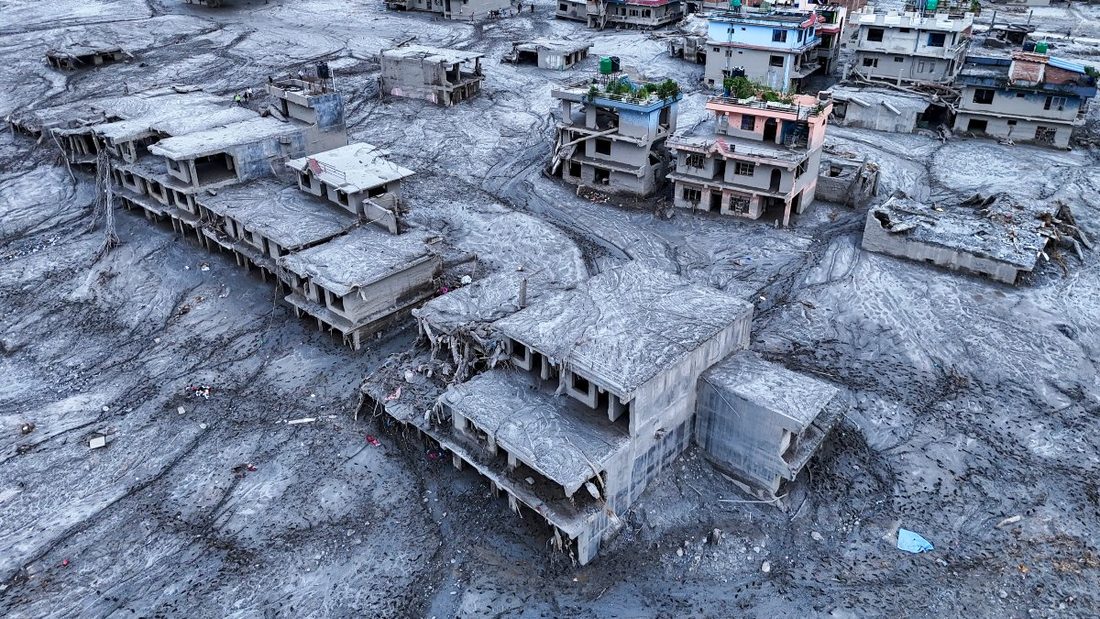
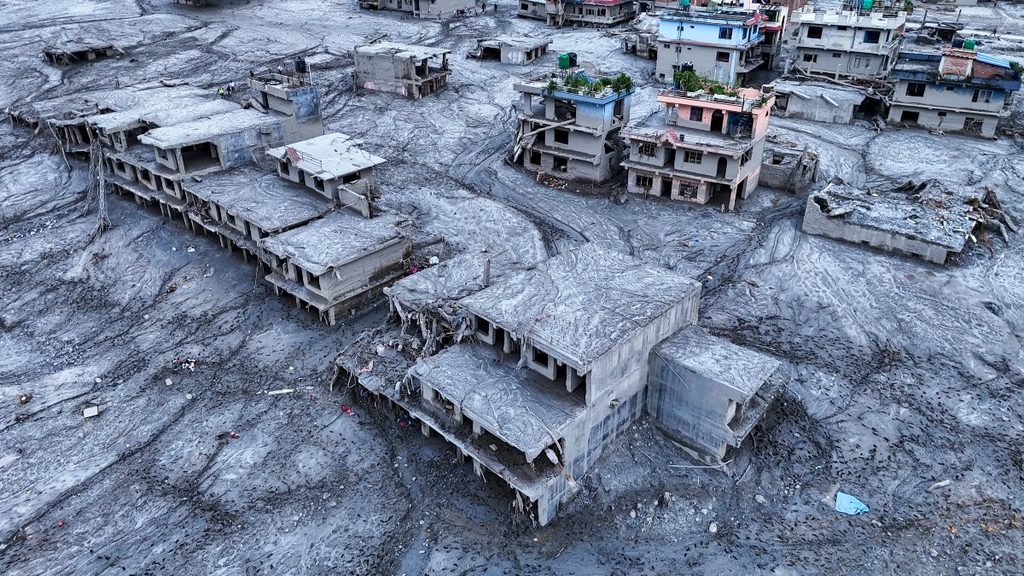
August 26th—Massive Ice Avalanche in Nepal-Tibet border district caused by collapse of a glacier, resulting in huge flash floods that killed 1,200 and left nearly 5,000 missing, many of whom will also be dead. Obviously a result of climate change
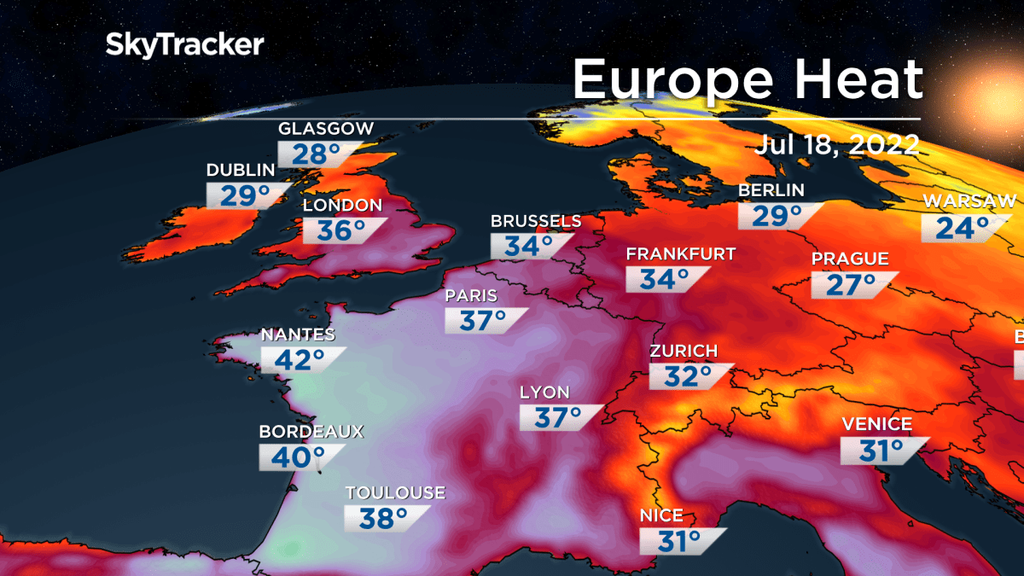
This year’s five summer heatwaves in Britain, and much more severe heat surges across Europe and other continents, ought to be a wake-up call to the working-class movement in all countries, whether in the imperialist world, or those who are the victims of imperialism. We have now seen the disaster on the border of Nepal and Tibet, with many hundreds killed by sudden flash floods, which appear to be the result of the collapse of a Himalayan glacier due to climate change. This is very ominous in today’s context with the accelerating damage that capitalism is inflicting.
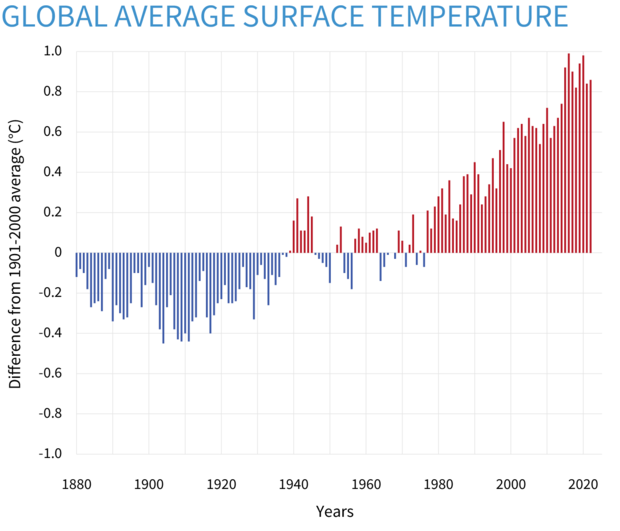
The lower limit that the Paris climate agreement of 2016 sought to avoid, of 1.5 degrees Celsius above pre-industrial temperature levels, has been repeatedly breached over the last several years, with 2026 as the worst by a considerable distance over the summer. The upper of the two limits that Paris sought to avoid, 2.0 degrees Celsius above pre-industrial levels, looms. The additional complicating factor is that this surge in temperatures coincides with the recurring El Niño climate phenomenon, which tends to push temperatures upwards considerably when it occurs, as it appears to do around every 8 years.
The El Niño phenomenon itself is undoubtedly being magnified by anthropogenic climate change, whose fundamental cause is the capitalist mode of production. The technological basis for removing fossil fuel emissions from industrial processes has existed for many years now. In China’s deformed workers state, large-scale endeavours are underway to deploy these technologies, including solar power and other renewables. Centralised state planning makes that possible on a massive scale. Even Wikipedia, which it is right to be dubious about because of its pro-Western, pro-Zionist bias, reports:
“China is the world’s top electricity producer from renewable energy sources. China’s renewable energy capacity is growing faster than its fossil fuels and nuclear power capacity. China installed over 430 GW of renewables in 2025, reaching a total installed renewable capacity of over 2.34 TW by the end of the year. The country aims to achieve peak emissions by 2030 and carbon neutrality by 2060; emissions may have already peaked in 2024, six years ahead of the 2030 goal.” (https://en.wikipedia.org/wiki/Renewable_energy_in_China)
What this shows is that this is possible. China’s planned economy makes this possible. Even though there is extensive latitude for capitalism in China, it really is an expanded version of what used to be called ‘market socialism’ and the decisive power remains in the hands of the workers state and its labour bureaucracy, headed by the party of that labour bureaucracy, the Communist Party of China (CPC). China, unfortunately, is a severely deformed workers state, led by a labour bureaucracy that has long sought peaceful co-existence and collaboration with world capitalism, which makes it impossible for it to provide a genuinely universal alternative to the threat that capitalism poses to human existence. That requires the rebirth of a mass political working-class movement equipped with the world-revolutionary programme of Bolshevism, which requires that such a party – a new revolutionary Communist International – be created on an international scale, ultimately to replace the narrow, nationalist labour bureaucracy in China with a revolutionary internationalist leadership based on working-class democracy. Though even the nationally-limited, planned expansion of renewables in China show clearly what would be possible on a planetary scale if there was an internationalist, Bolshevik leadership.
Europe’s 2026 Heatwave summer
Russia has not been a workers’ state since the 1991 destruction of the USSR. It is currently run by a peculiar kind of capitalist regime that is heavily deformed by the continued presence in much of the society of the old labour bureaucracy of the degenerated USSR. This is because the USSR, however stunted, began the construction of a socialist mode of production in that state, a mode of production that is more advanced than capitalism, and which had taken root for almost 8 decades. Thus, the counter-revolution was limited in its scope and was forced to retreat before mass discontent at the end of the 1990s. The mass discontent was directed through the old labour bureaucracy. Yeltsin was forced out and replaced by Putin, a classic man of the apparatus, who though no longer adheres to any sort of ‘communism,’ rolled back much of the neo-liberal attack on the masses, jailed, exiled and, in some cases, eliminated the worst imperialist stooges among the oligarchy, and created what is a mixed economy, over 50% ‘statified,’ which is very much at odds with the demands of neoliberalism. But that has not translated, unlike China, into any major expansion of renewable energy. In the early period of his presidency, Putin was a sceptic about climate change, but appears to have changed his view, though this has led to very little action, no doubt because Russia, as is well known, is one of the world’s major producers of oil and gas.
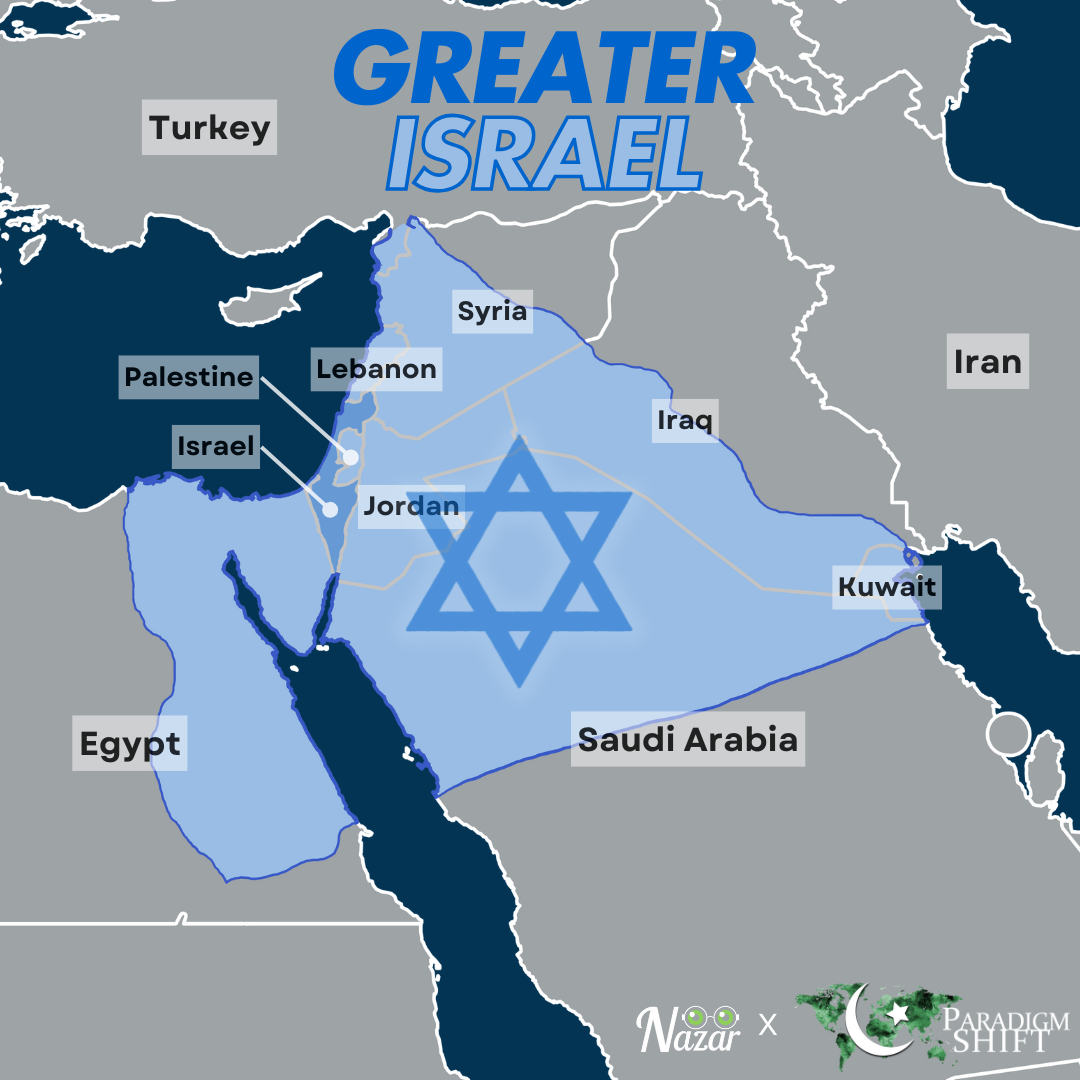
As for the West, the situation is far worse, as the populist Right, which has dominated US politics for at least the past decade and has made major inroads in Europe, overtly denies that human activity, and capitalism, is the cause of global heating. The fossil fuel industry has spent enormous sums funding climate change denial and persecuting climate activists. Not only that, but the Zionist and Western wars particularly in West Asia and Ukraine have been an extraordinary source of carbon emissions. The US’s bombing-sabotage of Russia’s Nord Stream pipeline in 2022 – as part of the Ukraine proxy war – was an incredible piece of climate vandalism that gave rise to the emission of 330 million pounds of methane, a far more potent greenhouse gas than carbon dioxide. The pulverisation of Gaza and now Lebanon by Israel, and now the US/Israel war on Iran, are just as potent a source of emissions if not more so. All these wars are clearly wars of choice waged by imperialism to defeat states that they want to destroy in pursuit of a strategy of imperialist conquest. The ‘Global Chessboard’ as the US ideologue Zbigniew Brzezinski put it, or Greater Israel whose provenance is well-known. To do away with this deadly danger to humanity, imperialist capitalism needs to be overthrown by the working-class led by a new revolutionary, internationalist, communist movement in the tradition of the Bolsheviks, the Third International of Lenin, and the early Fourth International of Trotsky.
Capitalist Threat to Survival: Its food production and supply system
There are many facets to the way capitalism destroys the biosphere and threats human existence. Planet Earth is very resilient and the notion that ‘the planet’ is threatened by human activity misses the point; which is that human existence, and human civilisation, is threatened by what humanity has been doing to the biosphere in the period since the Industrial Revolution of the 19th Century. The rapid fire burning of fossil fuels and the unplanned advance of technology for profit allows activities that constitute a long-term threat to aspects, if not the totality, of human existence, to dominate industry and industrialised agriculture simply because they generate profits for an exploiting minority, not because they are rational from the standpoint of future human development or even survival.
For instance, the nature and availability of our food is determined by capitalism’s relentless drive for ever-increasing profits at the expense of human labour and natural resources. The methods used to produce crops and animals for meat, eggs and dairy produce are aimed at high returns at the expense of long-term soil fertility and the maintenance of natural ecosystems. This involves the large-scale use of artificial fertilisers and pesticides; cheap, expendable labour; large areas of mono-crops managed using heavy machinery powered by fossil fuels, commonly diesel; intensive rearing of animals for meat, eggs and dairy produce.
Food and animal feed growth are outsourced to parts of the world where production may be cheaper, often resulting in deforestation, such as destroying parts of the Amazon Forest in South America, to make way for big agribusiness and land degradation. Farm workers and local inhabitants suffer severe damage to their health from exposure to pesticide spraying. Genetically modified (GM) soya beans are grown across large areas of Argentina for export to be used to feed intensively reared animals in places such as China and across Europe, including Britain. Thus meat, eggs and dairy produce sold in Britain very likely comes from animals fed on GM soya while the impact on human health of eating the products of intensively farmed animals, fed on GM crops, is unknown. Large areas of forest are cleared, destroying the natural habitats that animals, such as orangutans, depend on, to produce large quantities of palm oil for export for use in western processed foods. Without cooking everything we eat entirely from basic ingredients; it is extremely difficult to avoid palm oil. Vegetables grown using land in low-income countries such as Kenya for export to Britain and Europe deny the use of that land for growing food for the indigenous people. Quinoa and avocados grown in South America take resources of land and water away from the local people.
The production of artificial fertilisers, pesticides, GM crops and intensively reared animal feeds is also the product of the insatiable corporate drive for profits driving global, and British, environmental damage. The use of some artificial fertilisers progressively damages soil structure and reduces natural, organic fertility. This is compounded by many chemical pesticides which can destroy vital soil micro-organisms, natural pest predators as well as insects, such as bees, vital for pollination. Organisms such as worms play a vital role in maintaining soil nutrients and structure. Soil structure is often further damaged by the overuse of heavy farm machinery. Imprecise, overuse of such fertilisers causes leaching of these nutrients from the soil into ground water, waterways and rivers. Intensive raising of farm animals for meat, eggs and dairy for high profit produces unsafe food with poor nutrition, subjecting the animals to unacceptable levels of suffering. The faeces and urine from these animals produce slurry, which is generally treated as waste instead of being recycled as natural fertiliser resulting in a run-off, further polluting the ground water and rivers flowing out to sea.
This results in marine dead zones globally, an example being in the Gulf of Mexico off the Louisiana coast. Annually, the Mississippi and Atchafalaya rivers carry about 1.6 million tons of dissolved nitrogen into the Gulf of Mexico. The spring and early summer peak flow causes massive growth of marine organisms that sink to the bottom to be composted by microbes, consuming oxygen. The resulting low levels of oxygen kills marine species, such as molluscs, sea anemones and worms, thus disrupting the food chain and habitat. This creates a dead zone covering an average of 11,000 square kilometres, and reaching 17,366 square kilometres in 2024. This dead zone lasts until cooler weather or storms promote downward mixing of oxygen-rich surface waters.
The dissolved nitrogen pouring into the Gulf of Mexico each year is 23% of the amount applied to crops in the Mississippi River basin. The US Environmental Protection Agency in 2008 began an attempt to reduce the size of the Gulf of Mexico hypoxic (low oxygen) zone by 2015. The corporations profiting from agricultural chemicals and the overproduction of corn and soya successfully resisted state and local agencies’ attempts to require changes to protect the waterways. The Baltic Sea dead zone is larger and perhaps more destructive than the one in the Gulf of Mexico. The attempts by Finland, Sweden and other nations on the Baltic Sea coast to improve the environment in the Baltic Sea, failed in the same way as the attempts to clean up the Gulf of Mexico.
Decades, even centuries, of removing natural forests, trees and hedgerows to maximise the land area for cultivation and to accommodate ever-increasing sizes of farm machinery, have damaged the soil and essential ecosystems. In periods of low rainfall and drought, soil is turned to dust from loss of structure and nutrients, getting blown away where there is nothing to protect the soil from the wind. In periods of heavy rainfall, flooding occurs washing away topsoil. Dried out ground cannot absorb water, while, without trees or hedges, there are no deep roots to absorb or trap and retain water to prevent run-off.
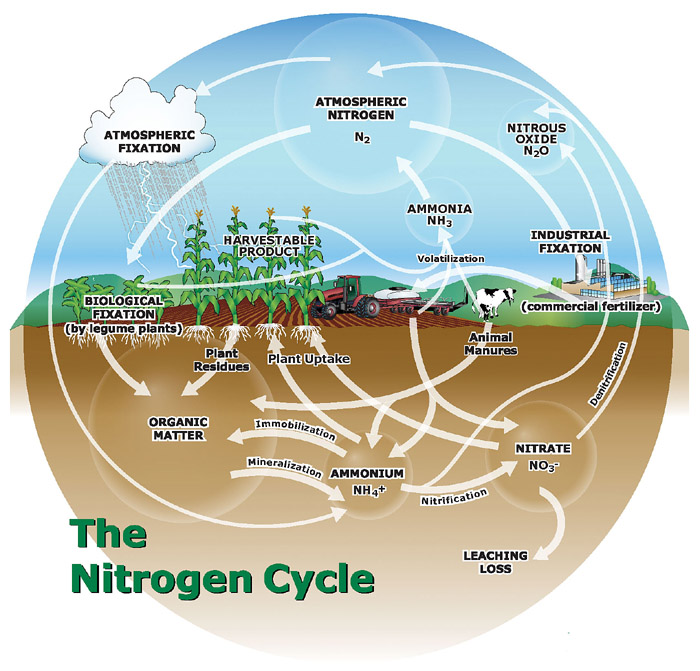
78% of the atmosphere is nitrogen, mainly in the form of inert dinitrogen (N2) molecules, requiring the high energy and heat of lightning bolts to split them, which only happens in very small volumes. N2 diffuses from the air into soil and surface waters. Leguminous plants, such as beans, peas, lentils, clover (often used as a cover crop), fix nitrogen from N2 with the aid of numerous species of micro-organisms in root nodules to produce nutrients in the soil taken up by plants. Micro-organisms also convert nitrogen compounds to return nitrogen, in the form of N2, back to the air. The nitrogen cycle in natural ecosystems thus limits the amount of nitrogen in reactive, unstable compounds in the atmosphere. This natural regulation is bypassed by the use of synthetic nitrogen fertiliser leading to an increase in nitrous oxide (N2O) in the atmosphere. Since nitrous oxide is a greenhouse gas, synthetic nitrogen fertiliser is contributing to global warming.
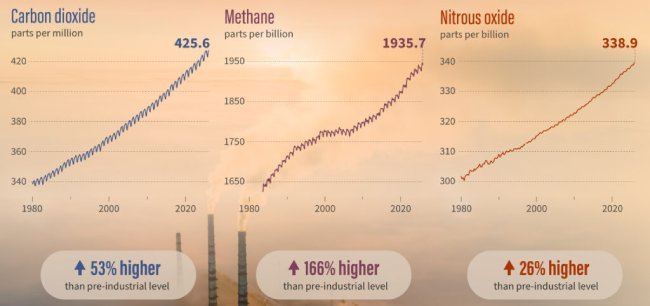
Solar energy in the form of ultra-violet and visible light is partially radiated back to space as infra-red energy, that is, heat, from the Earth’s surface. A very small fraction of the Earth’s atmosphere is made up of greenhouse gases; that is, gases with a molecular structure that enables them to absorb long wave radiation (that is, heat) reflected back from the earth’s surface. These gases re-emit this heat towards the earth’s surface, resulting in warming. The major greenhouse gases are: carbon dioxide (CO2); methane (CH4), a natural gas used for heating; and nitrous oxide (N2O), originating from the use of synthetic nitrogen fertilisers and explosives used in weapons
The restriction of shipping access through the Strait of Hormuz, in response to the Israeli-US war against Iran, has resulted in increased costs of fossil fuels used for power on farms and price increases and shortages of artificial fertilisers that rely on fossil fuels for their production has occurred over the same late spring and summer months as record-breaking heat waves and drought. Outsourcing of food production with long complex international supply chains is also affected by this increased cost of fossil fuels, in turn increasing food prices.
Today’s drought is causing problems with essential water and irrigation for crop growth while the high temperatures slow plant growth with some plants dying from heat stress, even when they receive adequate water. Both problems could be mitigated by tree and hedge cover providing shade and retaining soil moisture. Thus, there is an urgent need to repair ecosystems, such as improving soil structure, restoring natural fertility and soil organisms, to support food production by moving towards organic methods of production in harmony with natural ecosystems. This requires reducing artificial fertiliser to the minimum amount needed for plant growth while, ideally, replacing it altogether with organic fertiliser such as cover crops and mixing raising animals with growing crops, vegetable and fruit so the animals can fertilise the soil naturally.
Perversely, to increase, or even just maintain, profit levels, the “logic” of capitalism requires even more exploitative food production methods, thus worsening the current problems in a vicious cycle. In Britain, particularly in England, the extreme weather, combined with increased costs of diesel and artificial fertiliser, means smaller farms are producing food for either very low returns or even at a loss. Some farmers thus go out of business and sell up while others install solar panels on agricultural land to provide an alternative income. The result is less food produced in a country that already relies on imports to feed its population. Consequently, we are now facing a combination of ever-increasing food prices while decades of austerity mean people have less money to buy food at the same time as worsening food shortages, which potentially threaten widespread malnutrition and hunger. While we need more of our food to be produced organically, for our own health and the improved fertility of agricultural land, increasing austerity is reducing personal incomes, so fewer people can afford the higher prices of organic food, making it less profitable, so less is produced and available.
AI and Data Centres
Just as we are facing food shortages driven by a combination of a dysfunctional food system, heat waves and drought caused by exponentially increasing global warming, there is a push to dramatically increase the number of data centres, serving the explosion in AI, globally, including an order of hundreds of proposed new data centres in Britain. The data centres in the queue to connect to the UK’s electricity grid represent around 73GW of demand, while the peak winter electricity demand for the entirety of the UK is around 47GW. Facilities using water to cool their computing equipment threaten a significant drain on the local environment and water supply.
The proposed data centre in North Ockendon, as one of Europe’s largest projects, would produce more than 1 million tonnes of CO2 a year if approved by Havering Council. The East Havering Data Centre Campus (EHDCC) is set to be built on 218 hectares of London green belt land. Google plans a data centre in Essex, expected to lead to a net increase in greenhouse gas emissions of 568,727 tonnes CO2 equivalent per year during operation. The Wapseys Wood, Buckinghamshire and Quest Park, Bedfordshire data centres will use 1.3GW of power and will produce more than 4.5m tonnes of carbon emissions annually. Because of the long wait to connect to the grid, these data centres are seeking to build their own on-site gas-fired power stations.
The environmental impact of proposed hyper-scale data centres in Scotland, such as in Edinburgh and at Auchtertool in Fife, is also a serious concern. No decision should be made without local working-class people even knowing how much electricity and water these sites will consume, what strain they will place on the grid and whether they will rely on diesel generators for backup power. The Auchtertool development could consume the equivalent of the annual electricity use of around 1.6 million typical households.
These are just some of the data centres planned for England and Scotland. Their environmental costs will not only be the power and water they use, but also the intolerable noise pollution they cause, including sound below the human hearing range, which urgently needs research into its harmful effects on both human health and the environment. In January 2025, Keir Starmer’s AI Opportunities Action Plan, pushed by the notorious Zionist Peter Kyle MP, merged the planning zone framework with the AI and data centre push, announcing AI Growth Zones with accelerated planning approval, priority grid access, and energy price discounts, all publicly funded, for data centres in designated regions. Andy Burnham has inherited the national AI Growth Zone programme as Prime Minister. Though he sacked Kyle, he replaced him with the similarly odious Zionist Liz Kendall. Effectively, data centres have been removed from democratic planning controls.
In support of the corporate interests set to profit from the expansion in AI and data centres, the standard alleged benefits of the capitalist gods of ‘growth’ and ‘jobs’ are trotted out. Growth equates to the relentless increasing drive for exploitation and profits destroying the natural environment we depend on. This demagogy about ‘jobs’ is artificial since capitalism deliberately forces a proportion of people into idleness to keep labour cheap, while preventing public finances being used to cover the cost of filling job vacancies of genuine social value.
The UK government is promoting AI and data centres as critical infrastructure, allegedly for security reasons, claiming the need to hold the population’s data domestically in in the UK, for services such as banking and health data, and for the UK to maintain a ‘competitive advantage’ in advanced technology. This anti-democratic nature of British imperialist nationalism is evident here, as although the infrastructure exists for local digital services, as a result of the government’s decisions, neither health data nor the data of other government departments are protected from exploitation by sinister capitalist economic predators, such as Palantir, (co-founded by Peter Thiel and Alex Karp), the data-mining company with deep CIA and defence intelligence roots. This is now embedded in NHS data infrastructure, UK defence contracts, and the data architecture of multiple government departments.
The current massive expansion in the use of AI and data centres is for surveillance, targeting of weapons and drones for killing people, creating data sets for propaganda, and targeted advertising for pushing over-consumption. These are international, socially and environmentally destructive activities consistent with capitalism’s inherent push for profits by means of authoritarian control, war, and perpetually expanding markets.
There are potentially useful applications for AI, such as scientific research, economic planning, climate modelling and weather forecasting, which need to be made use of on an international level to benefit the global working-class population, but it is certainly not our interests these predators have in mind. All this technology urgently needs to be placed under workers control, and the profit motive totally eliminated from any decisions about the possibility of its deployment, or non-deployment, which should be a collective decision of class-conscious, working-class movements internationally. Where such movements do not exist, they must be created, as working-class control here is a matter of life and death. Workers’ control is something that can only be achieved by a political working-class movement, one that has an organised mass base and sufficient support among organised workers to be able to initiate mass, political strikes.
UK Government marketing propaganda for AI Data Centres
This is where trade union economism reveals its complete bankruptcy. Trade union misleaders, and bureaucrats like Sharon Graham of UNITE, support the war drive against Russia over Ukraine, partly due to racist, Russophobic and anti-Communist ideology, but also because expanded war expenditure delivers ‘jobs.’ Never mind that such ‘jobs’ endanger the existence of the working-class by pushing the planet towards a potential nuclear confrontation. But it is not difficult to imagine such terminally stupid bureaucrats supporting these data centres on the grounds that they will deliver ‘jobs.’ The jobs in these cases contributing to frying the working-class population in their own homes, and killing off the young and the old in particular. This is where crude social-chauvinism and economism becomes a literally suicidal programme.
Non-deployment – i.e. total veto should be the default option for the foreseeable future – until sufficient environmentally sustainable energy sources exist to run such things without affecting those that working-class people depend upon for their lives and well-being. Zeroattacks on the environment of this type are acceptable. We need mass strikes to stop them, and working-class mass actions that may indeed result in, by one means or another, the closing and even demolition of such facilities.
Socialism or Barbarism
As James Connolly wrote in 1907:
Some men, faint-hearted, ever seek, Our programme to retouch, And will insist, whene’er they speak, That we demand too much. ‘Tis passing strange, yet I declare , Such statements give me mirth, For our demands most moderate are, We only want the earth.
There is undoubtedly much more evidence that could be adduced about environmental degradation around the world caused by the drive for profit that is built into capitalism. This is not, as the ideology of neo-liberal capitalism preposterously maintains, something that ‘trickles down’ to the masses as the capitalist economy grows. It was recently noted in a widely circulated internet meme that the world capitalist economy is 700% larger today than it was in 1970, whereas the average person has only seen his/her income grow by 8%. But this economic growth under capitalism has led to the near doubling of greenhouse gas emissions over the same period, from 23 billion tons in 1970 to 53 billion tons in 2024. This shows two things; one being that capitalist economic growth overwhelmingly benefits a tiny minority of parasites; and, secondly, that despite that, the technology in use does not simply, mechanically extend greenhouse emissions in a linear manner as it grows. This shows that the propaganda of the climate deniers is false and purely self-interested, and the reactionary drivel that is being pumped out today that alleges over-population, not capitalism, is the source of dangers to humanity, is a lie. It is perfectly possible with global economic planning to reverse the trend that, if it is allowed to continue, will change the biosphere and make it unsuitable for human existence and habitation, likely for millions of years.
The solution, contrary to the fatalism promoted by the bourgeois politicians, is in the hands of the working-class movement internationally. The class struggle to reverse the neo-liberal attacks of the last 50 years, which represent a concentrated effort to solve the problems of crisis-ridden capitalism at the expense of the working class, must coalesce with the struggle to use economic planning to change the basis of the future socialist society to sustainable energy use. There needs to be an emergency programme to do just this. Capitalist ‘Net Zero’ policies invariably include attacks on the working-class and are a set-up for populist agitation to defeat them, as the bourgeoisie certainly are not prepared to try to solve the environmental crisis at their own expense. This is why ‘Green’ capitalism is a completely illusory idea. We need our own version of the ‘Net Zero’ programme at their expense, involving the capitalist class being relieved of their property on an international scale, by an international working-class movement led by conscious Communists. That is the only way we can get the economic and material changes needed to sustain human existence. The alternative to socialism has always been the collapse of capitalism into barbarism, and an environmentally driven collapse of human civilisation is a real danger today because of capitalism. It must go!
The following is the notes/text of a presentation delivered by a Consistent Democrats speaker on 30th August.The recording of the presentation and discussion is here.
This Manifesto is the key founding document of the Marxist movement of Scientific Socialism, in other words Communism, in the real sense of the term.
And this section, part 2, is the core, seminal section of the document. Part one is by way of an introduction and a sketch that really illustrates the application of the method of historical materialism to the whole of human history. Part 2 focuses on the struggle of Communists within the current social system of capitalism, and on the relationship of the communists to the working class.
It lays out the key points about the relationship of communist with the working class, when it says:
“In what relation do the Communists stand to the proletarians as a whole?
“The Communists do not form a separate party opposed to the other working-class parties.
“They have no interests separate and apart from those of the proletariat as a whole.
“They do not set up any sectarian principles of their own, by which to shape and mould the proletarian movement.
“The Communists are distinguished from the other working-class parties by this only: 1. In the national struggles of the proletarians of the different countries, they point out and bring to the front the common interests of the entire proletariat, independently of all nationality. 2. In the various stages of development which the struggle of the working class against the bourgeoisie has to pass through, they always and everywhere represent the interests of the movement as a whole.
“The Communists, therefore, are on the one hand, practically, the most advanced and resolute section of the working-class parties of every country, that section which pushes forward all others; on the other hand, theoretically, they have over the great mass of the proletariat the advantage of clearly understanding the line of march, the conditions, and the ultimate general results of the proletarian movement.”
That can be seen as an implicit criticism of some of today’s rigid, sectarian left-wing politics. The key question is not and never has been organisational separation from those movements whose leading views are questionable, but organise class-conscious workers in some way.
The key question for communists is our obligation is to “represent the interests of the movement as a whole” and to understand “the line of march, the conditions, and the ultimate general results of the proletarian movement.” As long as these are maintained, many different tactics are appropriate.
This is emphasised when the Manifesto says:
“The theoretical conclusions of the Communists are in no way based on ideas or principles that have been invented, or discovered, by this or that would-be universal reformer.
They merely express, in general terms, actual relations springing from an existing class struggle, from a historical movement going on under our very eyes…”
From that, the Manifesto goes on:
“The immediate aim of the Communists is the same as that of all other proletarian parties: formation of the proletariat into a class, overthrow of the bourgeois supremacy, conquest of political power by the proletariat.”
In one sense, this shows how the document is dated. Because it is no longer true that ‘ all other’ proletarian parties stand for “the conquest of the political power by the proletariat”. The Manifesto was written before imperialism developed, and bourgeois workers parties like Labour were created.
Moving on from that, the Manifesto goes on to talk about the specificity of the proletarian struggle:
“ The abolition of existing property relations is not at all a distinctive feature of communism.
“All property relations in the past have continually been subject to historical change consequent upon the change in historical conditions.
“The French Revolution, for example, abolished feudal property in favour of bourgeois property.
“The distinguishing feature of Communism is not the abolition of property generally, but the abolition of bourgeois property. But modern bourgeois private property is the final and most complete expression of the system of producing and appropriating products, that is based on class antagonisms, on the exploitation of the many by the few.
“In this sense, the theory of the Communists may be summed up in the single sentence: Abolition of private property.”
The Manifesto then replied to the bourgeois outcry against the abolition of private property.
“… does wage-labour create any property for the labourer? Not a bit. It creates capital, i.e., that kind of property which exploits wage-labour, and which cannot increase except upon condition of begetting a new supply of wage-labour for fresh exploitation. Property, in its present form, is based on the antagonism of capital and wage labour. …”
And they go on to examine this relationship:
“To be a capitalist, is to have not only a purely personal, but a social status in production. Capital is a collective product, and only by the united action of many members, nay, in the last resort, only by the united action of all members of society, can it be set in motion.
“Capital is therefore not only personal; it is a social power.
“When, therefore, capital is converted into common property, into the property of all members of society, personal property is not thereby transformed into social property. It is only the social character of the property that is changed. It loses its class character.”
The attempt by capitalist ideologues to claim that communists want to abolish the meagre property that workers possess, is refuted:
“We by no means intend to abolish this personal appropriation of the products of labour, an appropriation that is made for the maintenance and reproduction of human life, and that leaves no surplus wherewith to command the labour of others. All that we want to do away with is the miserable character of this appropriation, under which the labourer lives merely to increase capital, and is allowed to live only in so far as the interest of the ruling class requires it.
And likewise, they pull apart the claim that the abolition of bourgeois property represents the abolition of ‘freedom’:
“By freedom is meant, under the present bourgeois conditions of production, free trade, free selling and buying.”
[…]
“You are horrified at our intending to do away with private property. But in your existing society, private property is already done away with for nine-tenths of the population; its existence for the few is solely due to its non-existence in the hands of those nine-tenths….
“In one word, you reproach us with intending to do away with your property. Precisely so; that is just what we intend.”
They take on one-by-one the bourgeois objections:
“It has been objected that upon the abolition of private property, all work will cease, and universal laziness will overtake us.
“According to this, bourgeois society ought long ago to have gone to the dogs through sheer idleness; for those of its members who work, acquire nothing, and those who acquire anything do not work. “
Summing this up, the Manifesto lays out its indictment of capitalism and why it must disappear:
“The selfish misconception that induces you to transform into eternal laws of nature and of reason, the social forms springing from your present mode of production and form of property – historical relations that rise and disappear in the progress of production – this misconception you share with every ruling class that has preceded you. What you see clearly in the case of ancient property, what you admit in the case of feudal property, you are of course forbidden to admit in the case of your own bourgeois form of property.”
Likewise with the bourgeois outcry about the communists’ view on the family:
“On what foundation is the present family, the bourgeois family, based? On capital, on private gain. In its completely developed form, this family exists only among the bourgeoisie. But this state of things finds its complement in the practical absence of the family among the proletarians, and in public prostitution.
“The bourgeois family will vanish as a matter of course when its complement vanishes, and both will vanish with the vanishing of capital.
“Do you charge us with wanting to stop the exploitation of children by their parents? To this crime we plead guilty.”
[…]
“The bourgeois clap-trap about the family and education, about the hallowed co-relation of parents and child, becomes all the more disgusting, the more, by the action of Modern Industry, all the family ties among the proletarians are torn asunder, and their children transformed into simple articles of commerce and instruments of labour.”
And then there is the famous allegation that the communists would introduce a ‘community of women”:
“The bourgeois sees his wife as a mere instrument of production. He hears that the instruments of production are to be exploited in common, and, naturally, can come to no other conclusion than that the lot of being common to all will likewise fall to the women.
“He has not even a suspicion that the real point aimed at is to do away with the status of women as mere instruments of production.”
I suppose the following passage might once have been seen as contentious, but given what we know about the proclivities of today’s billionaire Epstein class, it seems quite mild:
“Our bourgeois, not content with having wives and daughters of their proletarians at their disposal, not to speak of common prostitutes, take the greatest pleasure in seducing each other’s wives.
“Bourgeois marriage is, in reality, a system of wives in common and thus, at the most, what the Communists might possibly be reproached with is that they desire to introduce, in substitution for a hypocritically concealed, an openly legalised community of women. For the rest, it is self-evident that the abolition of the present system of production must bring with it the abolition of the community of women springing from that system, i.e., of prostitution both public and private.”
Then there is the charge that communists want to abolish nations and nationality. The response to this is so pithy that we can cite it in full:
“The working men have no country. We cannot take from them what they have not got. Since the proletariat must first of all acquire political supremacy, must rise to be the leading class of the nation, must constitute itself the nation, it is so far, itself national, though not in the bourgeois sense of the word.
National differences and antagonism between peoples are daily more and more vanishing, owing to the development of the bourgeoisie, to freedom of commerce, to the world market, to uniformity in the mode of production and in the conditions of life corresponding thereto.
The supremacy of the proletariat will cause them to vanish still faster. United action, of the leading civilised countries at least, is one of the first conditions for the emancipation of the proletariat.
In proportion as the exploitation of one individual by another will also be put an end to, the exploitation of one nation by another will also be put an end to. In proportion as the antagonism between classes within the nation vanishes, the hostility of one nation to another will come to an end.
Actually, in the epoch of imperialism, capitalism developed a counter-tendency to this, setting the peoples of oppressor, imperialist countries against each other, and even more against those in countries who were the victims of imperialism. But Marx and Engels did not live long enough to fully address this.
We have to address it today, by formulating concrete Marxist policies on every national question to which imperialist capitalism gives rise. Though overall, what the Manifesto says is true, that capitalist development, in spite of this, is undermining the basis for nations and nationalism.
Imperialism itself is an expression of the fact that the productive forces created by capitalism have outgrown the nation-state itself, which is obsolete.
The manifesto rightly dismisses the objections to Communism from “from a religious, a philosophical and, generally, from an ideological standpoint” as “not deserving of serious examination”. It asks:
“What else does the history of ideas prove, than that intellectual production changes its character in proportion as material production is changed? The ruling ideas of each age have ever been the ideas of its ruling class.”
And concludes from that:
“When people speak of the ideas that revolutionise society, they do but express that fact that within the old society the elements of a new one have been created, and that the dissolution of the old ideas keeps even pace with the dissolution of the old conditions of existence.”
It notes that the proletarian revolution is different from previous revolutions, as:
“… one fact is common to all past ages, viz., the exploitation of one part of society by the other. No wonder, then, that the social consciousness of past ages, despite all the multiplicity and variety it displays, moves within certain common forms, or general ideas, which cannot completely vanish except with the total disappearance of class antagonisms.
“The Communist revolution is the most radical rupture with traditional property relations; no wonder that its development involved the most radical rupture with traditional ideas.
And having dismissed those anachronisms, it goes onto practical matters:
“ We have seen above, that the first step in the revolution by the working class is to raise the proletariat to the position of ruling class, to win the battle of democracy.
The proletariat will use its political supremacy to wrest, by degrees, all capital from the bourgeoisie, to centralise all instruments of production in the hands of the State, i.e., of the proletariat organised as the ruling class; and to increase the total of productive forces as rapidly as possible.”
The list of demands at the end, are fine, but of their time, and have been superseded by other, much more detailed programmes. I will not read them out. Marx and Engels themselves say “These measures will, of course, be different in different countries” and they note that they are applicable to “advanced countries” in particular. 10 demands which are the basis of other more detailed elaborations.
But what is also striking is the resemblance between the conclusion of this part of the Manifesto, and later, more detailed elaborations, such as Marx’s Critique of the Gotha Programme. Which we touched on in studying Lenin’s State and Revolution earlier:
“When, in the course of development, class distinctions have disappeared, and all production has been concentrated in the hands of a vast association of the whole nation, the public power will lose its political character. Political power, properly so called, is merely the organised power of one class for oppressing another. If the proletariat during its contest with the bourgeoisie is compelled, by the force of circumstances, to organise itself as a class, if, by means of a revolution, it makes itself the ruling class, and, as such, sweeps away by force the old conditions of production, then it will, along with these conditions, have swept away the conditions for the existence of class antagonisms and of classes generally, and will thereby have abolished its own supremacy as a class.”
This is indeed, the withering away of the state, as dealt with more concretely by Marx after the Paris Commune, as cited by Lenin. Which accompanies the higher stage of communist society, as Marx again later elaborated, where:
“In place of the old bourgeois society, with its classes and class antagonisms, we shall have an association, in which the free development of each is the condition for the free development of all.”
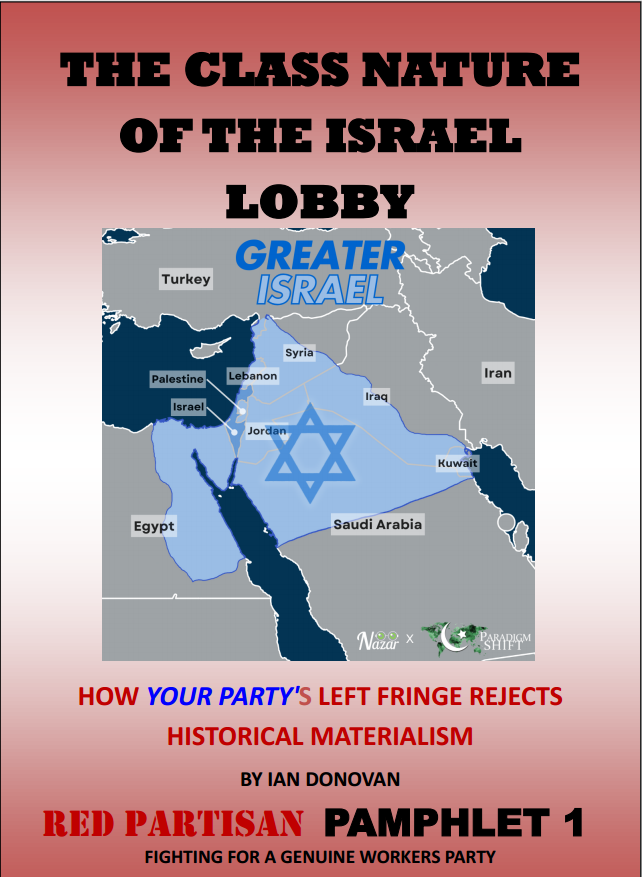
The material in this pamphlet grew out of political disputes about Zionism and the Palestinian genocide within the supposed left wing of Your Party, as founded by Zarah Sultana and Jeremy Corbyn in 2025. It contains a coherent and evidenced exposition of the class nature of the Israel lobby, and its role as the bearer within many countries in the West of the interests of Israel as an imperialist power in its own right. It therefore explains how Israel has so far been able to manipulate Western politics to get away with genocide, without any serious pushback from the dominant powers, despite their attempts to profit politically from their supposed opposition to previous genocides, notably Nazi Germany’s genocide in the mid-20th Century against the Jewish people.
Thanks to the West’s unusual relationship with genocidal Zionism, ‘Never Again’ has proven to be a sick joke. Genocide has happened again, blatantly, and copiously documented. This pamphlet explains how this has come about, gives pointers as to why the left has been ineffective at counteracting it, and points to what needs to be addressed to deal with Zionism as today’s blatant genocidal form of capitalist politics.
The following is the notes/text of a presentation delivered by a Consistent Democrats speaker on 16th August.The recording of the presentation and discussion is here.
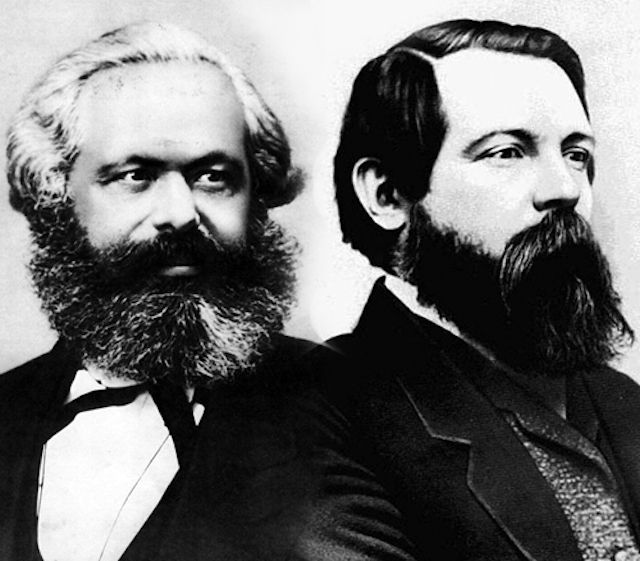
This obviously is a pioneering pamphlet, perhaps the founding document of the Marxist movement, that lays down some very simple concepts about history and the evolution of human society up to the mid-19th Century when it was published. It lays down not just the beginning of a communist, working-class programme for that historical moment, but also briefly, but coherently, lays out the materialist conception of history that Marx, and according to Engels, him alone, had distilled from his extensive study of human history up to that point.
It was the outcome of extensive, but secretive, discussions between communists, mainly those who lived in European countries such as France, Germany (then disunited, fragmented into many small states), Italy (likewise) and Poland, to name but a few. Feudal, or quasi-feudal reaction reigned there in 1847 when it was written. The various small groups of communists who had come together in the Communist League, did so very cautiously, and operated in secret, fearing retribution. The main organisation that originally made up the Communist League was the League of the Just, formed in Paris in 1834 by exiled German radicals. In 1847 it merged with the Communist Correspondence Committee, which was really Marx and Engels, to form the Communist League. They met up in London at a congress sometime in 1847, and Marx and Engels agreed to draft a proper manifesto, to explain the basic ideas of Communism, which was then the subject of hysterical press stories, but very few were familiar with Communist ideas.
In some ways even this part 1 of this manifesto is divided into two parts. The first part explains the materialist conception of history, how, after the dissolution of the early village societies, that predated private property as an institution, society began to differentiate into classes. It explains how society evolved through a series of succeeding modes of production, each based on particular ruling classes, oppressing and exploiting other classes, each such class being derived from particularly modes of social production. There were societies built on slavery, through feudalism, with several different forms of oppression, between lord and self, through the guilds, etc. Preceding the emergence of bourgeois society.
Each successive dominant mode of production became so because it played a progressive role in increasing the overall productivity of human society, the overall aggregate of social wealth Sometimes such modes of production lasted thousands of years. We still do not know as much as we perhaps ought to about pre-feudal slave modes of production. We do know that feudalism lasted over 1000 years, in Europe at least, from the fall of the Roman Empire to the Dutch Revolt against Spain from 1555 to 1601. Which was the first of a number of bourgeois revolutions, including the English Revolution in the 1640s, and later the French Revolution at the end of the 18th Century.
We don’t really know enough about what Marx later called the Asiatic mode of production. Pre-capitalist societies in Asia. What we do know is that societies built on irrigation of land by a central authority appeared to work differently, and that was common in large civilisations like India. These appear to be much more centralised kind of pre-capitalist systems, that did not involve parcellised sovereignty of local lords, which had a great deal of autonomy, though still under a king. The most centralised did not seem to easily generate an incipient bourgeois class internally. They appeared to last a very long time. It does appear that feudalism developed in the more temperate zone – in Eurasia at least. Feudalism developed in Europe, and also Japan – the Shogunates.
The key point of these is that in general, any of these modes of production may be brutal, but if they tended overall to raise the productivity of human labour, and were incapable of being exceeded by something else contemporary at a given time, they would have a degree of dynamism, and thrive regardless of moral considerations. In that sense, they played a progressive role. That was true of various societies where production was carried out by slaves. It is not always the case, for instance, that slaves were always lowly and oppressed. You could get societies where some layers of the population were formally unfree and enslaved, and yet played a major political role in running those societies. Even ruling them. Such were the Mamluks in Egypt around 900 years ago. Something similar happened in India.
This was very different from the slavery that was part of the primitive accumulation of capital, that was a key part of the early stage of capitalist society in the West, characterised by the Triangular trade to the Americas. That was probably the most barbaric form of slavery in history, because though it used forced labour, it was to produce commodities for an expanding capitalist market, particularly cotton in the nascent US, of course. Many millions died. It was a great atrocity of early capitalism.
Yet what can you say about early capitalism? It did also give rise to democratic movements – to the English civil war, to the French revolution, to the many other revolutions of the 19th century. It created the industrial and technical basis for the emergence of a modern working-class movement. Which as Marx and Engels noted in the Manifesto simplified the class antagonisms and created a class which, by taking power, can put an end to all forms of exploitation and oppression. Capitalism commodifies all things, based on the quantity of human labour to produce items for sale in the capitalist market. And the aspect that makes it fully capitalist, is that labour power is also a commodity for sale in the market. Its value is also the amount of human labour needed to produce it. In that sense, slave labour is not capitalist. The worker belongs to the boss. Whereas with capitalist wage labour, the worker’s labour power belongs to him or her, and he hires it out to the capitalist. In formal terms that is. He or she still has to work to survive. So, a non-capitalist, or partly non-capitalist, form of labour, was used to accumulate enough capital to industrialise the West. That was a historic crime, and why those countries in the Americas that were centres of capitalist slavery, are demanding reparations for this crime from the West, whose whole wealth was initially based on this slavery of mainly black African people.
The second section of part 1, is where Marx and Engels talk about the revolutionary role first of the bourgeoisie, and then the rise of the working-class movement to the point that it plays a revolutionary role.
“We see, therefore, how the modern bourgeoisie is itself the product of a long course of development, of a series of revolutions in the modes of production and of exchange.”
And it goes on (these are extracts, not necessarily strictly consecutive).
“The bourgeoisie, historically, has played a most revolutionary part.”
“The bourgeoisie, wherever it has got the upper hand, has put an end to all feudal, patriarchal, idyllic relations. It has pitilessly torn asunder the motley feudal ties that bound man to his “natural superiors”, and has left remaining no other nexus between man and man than naked self-interest, than callous “cash payment”.
“The bourgeoisie cannot exist without constantly revolutionising the instruments of production, and thereby the relations of production, and with them the whole relations of society.”
“The need of a constantly expanding market for its products chases the bourgeoisie over the entire surface of the globe. It must nestle everywhere, settle everywhere, establish connexions everywhere.”
“The bourgeoisie has through its exploitation of the world market given a cosmopolitan character to production and consumption in every country. To the great chagrin of Reactionists, it has drawn from under the feet of industry the national ground on which it stood.”
“The bourgeoisie keeps more and more doing away with the scattered state of the population, of the means of production, and of property. It has agglomerated population, centralised the means of production, and has concentrated property in a few hands. “
“The bourgeoisie, during its rule of scarce one hundred years, has created more massive and more colossal productive forces than have all preceding generations together.”
And Marx and Engels address how this came to be.
“We see then: the means of production and of exchange, on whose foundation the bourgeoisie built itself up, were generated in feudal society. At a certain stage in the development of these means of production and of exchange, the conditions under which feudal society produced and exchanged, the feudal organisation of agriculture and manufacturing industry, in one word, the feudal relations of property became no longer compatible with the already developed productive forces; they became so many fetters. They had to be burst asunder; they were burst asunder.”
And then, in turn, we see the same thing beginning to happen to bourgeois society:
“A similar movement is going on before our own eyes. Modern bourgeois society, with its relations of production, of exchange and of property, a society that has conjured up such gigantic means of production and of exchange, is like the sorcerer who is no longer able to control the powers of the nether world whom he has called up by his spells.”
Ever more serious economic crises:
“Society suddenly finds itself put back into a state of momentary barbarism; it appears as if a famine, a universal war of devastation, had cut off the supply of every means of subsistence; industry and commerce seem to be destroyed; and why? Because there is too much civilisation, too much means of subsistence, too much industry, too much commerce. The productive forces at the disposal of society no longer tend to further the development of the conditions of bourgeois property; on the contrary, they have become too powerful for these conditions, by which they are fettered, and so soon as they overcome these fetters, they bring disorder into the whole of bourgeois society, endanger the existence of bourgeois property.”
We see the rise of the working-class movement:
“The weapons with which the bourgeoisie felled feudalism to the ground are now turned against the bourgeoisie itself.
But not only has the bourgeoisie forged the weapons that bring death to itself; it has also called into existence the men who are to wield those weapons — the modern working class — the proletarians.”
We see then an extended account of the beginnings, the rise, the consolidation and expansion of the working class as a class with the development and expansion of modern industry. The growth of the workers movement goes through fits and starts, progress and setbacks:
“Now and then the workers are victorious, but only for a time. The real fruit of their battles lies, not in the immediate result, but in the ever expanding union of the workers. This union is helped on by the improved means of communication that are created by modern industry, and that place the workers of different localities in contact with one another. It was just this contact that was needed to centralise the numerous local struggles, all of the same character, into one national struggle between classes. But every class struggle is a political struggle. And that union, to attain which the burghers of the Middle Ages, with their miserable highways, required centuries, the modern proletarian, thanks to railways, achieve in a few years.
“This organisation of the proletarians into a class, and, consequently into a political party, is continually being upset again by the competition between the workers themselves. But it ever rises up again, stronger, firmer, mightier. It compels legislative recognition of particular interests of the workers, by taking advantage of the divisions among the bourgeoisie itself. Thus, the ten-hours’ bill in England was carried.”
The workers movement even attracts into its ranks elements from the camp of the bourgeoisie itself:
“Just as, therefore, at an earlier period, a section of the nobility went over to the bourgeoisie, so now a portion of the bourgeoisie goes over to the proletariat, and in particular, a portion of the bourgeois ideologists, who have raised themselves to the level of comprehending theoretically the historical movement as a whole.”
And what is that “historical movement as a whole?”:
“Of all the classes that stand face to face with the bourgeoisie today, the proletariat alone is a really revolutionary class. The other classes decay and finally disappear in the face of modern Industry; the proletariat is its special and essential product.”
The proletariat represents the future of humanity:
“All previous historical movements were movements of minorities, or in the interest of minorities. The proletarian movement is the self-conscious, independent movement of the immense majority, in the interest of the immense majority.”
“Though not in substance, yet in form, the struggle of the proletariat with the bourgeoisie is at first a national struggle. The proletariat of each country must, of course, first of all settle matters with its own bourgeoisie.”
And thus, we come to Marx & Engels’ final conclusion:
“The essential conditions for the existence and for the sway of the bourgeois class is the formation and augmentation of capital; the condition for capital is wage-labour. Wage-labour rests exclusively on competition between the labourers. The advance of industry, whose involuntary promoter is the bourgeoisie, replaces the isolation of the labourers, due to competition, by the revolutionary combination, due to association. The development of Modern Industry, therefore, cuts from under its feet the very foundation on which the bourgeoisie produces and appropriates products. What the bourgeoisie therefore produces, above all, are its own grave-diggers. Its fall and the victory of the proletariat are equally inevitable.”
Though actually, it has proved to be more complex than that. Marx goes though some of those considerations in the next part, so I won’t jump the gun by addressing them here.
The Consistent Democrats urge comrades who are members of Unite the Union to vote for Simon Dubbins. Though Simon Dubbins is a left-wing member of the Labour Party, he is not a supporter of Zionism, but an active opponent who has been targeted in Unite for spurious disciplinary action three times for his activities in support of the Palestinians. He is Trade Union Officer for the Palestine Solidarity Campaign1. He Simon Dubbins was also directly involved in the Wapping dispute2.
Simon Dubbins wants to make Unite a more political Union and at least some of the political issues he raises are a step in the right direction. We reject the pseudo-syndicalist approach to trade unionism of Sharon Graham, the implication that trade union activities are separate from politics. Though it should be said that her claims to be an apolitical trade unionist have been shown to be false, as she is one of those in the trade union bureaucracy who has been notorious for demanding more arms spending, particularly for war in Ukraine. She has denounced Palestine and anti-NATO campaigners for ‘undermining’ members’ jobs by refusing to support rearmament. Under Burnham’s new government, with anti-Russian militarist John Healey as Chancellor and the arch-Zionist Wes Streeting as Defence Secretary, opposition to militarism will be even more a crucial political issue.
Sharon Graham has made hostile attacks on those within the union who support Palestine and particularly those who denounced and sought to publicise the witchhunt against the left, particularly the anti-Zionist left, and against Jeremy Corbyn’s leadership during his incumbency. When she stood for election in 2021, she conspicuously refused to denounce Keir Starmer’s leadership, and though she tried to make out that she was not minded to fund Labour when it attacked unions, she denounced political opponents of the Zionists and neoliberal Labour right as an unrepresentative minority.
In that election, we initially backed Howard Beckett (until he unfortunately withdrew). He was extremely outspoken in advocating that the union should oppose Starmer, should refuse to fund right-wing Labour, in such a point-blank, political manner that this strongly implied that he would welcome a challenge to Starmer from the left outside the Labour Party. That did not really begin to happen for another four years, but Beckett’s campaign certainly pointed to that. So, it is clear that subsequent events vindicated our support for Beckett.
Dubbins is standing in different circumstances, when Your Party was formed and now appears to have been severely damaged or even wrecked by the Corbynites misleadership, which has perhaps made it less likely for trade union activists to be attracted to such a damaged project. But the considerations above do point to critical support to Dubbins to be the correct position.
The following is the notes/text of a presentation delivered by a Consistent Democrats speaker on 26th July on this chapter.The recording of the presentation and discussion is here.
This chapter just rounds off the book, by illustrating how various supposedly illustrious leaders of the Second International tried desperately to evade the question of the state, and in particular the need to smash the existing, capitalist state machine, that was the core of Marx and Engels developed understanding. As Lenin said, he was addressing these questions briefly. We will obviously address them still more briefly, as this discussion does not have time to go into too much detail. Nor do we need to: the records of Kautsky and Plekhanov in WWI speak for themselves.
Plekhanov was earlier known as the ‘father of Russian Marxism’. Lenin and the Bolsheviks in a sense stood on his shoulders for his pioneering work in the Emancipation of Labour group beginning in 1883, which was also the year of Marx’s death. He certainly was a pioneer, but his politics over time revealed his limitations, and even though he founded Iskra along with Lenin in 1900, and initially sided with Lenin in the dispute over the definition of Party membership that was the basis for the Menshevik-Bolshevik split in 1903, he still gravitated towards the Mensheviks. Though he was in favour of a strong party with an effective paper, he increasingly embraced reformism and social chauvinism, and supported Russia in WWI. Lenin’s brief account of his controversy with the anarchists notes that Plekhanov made no mention of the need to smash the existing capitalist state, and replace it with a state consisting of the armed working class.
Kautsky’s conflict with Eduard Bernstein, the arch-revisionist of the SPD and Second International, is better known. It was paralleled by Rosa Luxemburg’s famous polemic against Bernstein, Reform or Revolution, where she concluded that reform and revolution were not different ways of travelling on the same road (to socialism), but entirely different roads. Kautsky’s own controversy with Bernstein was in an 1899 work called Bernstein and the Social-Democratic Programme. It involved some kind of defence of Marx and Engels against what amounted to a false polemic in which Bernstein attempted to associate the Marxists with Blanquism, the view that a revolutionary minority could seize power without the masses being active participants.
Bernstein likewise tried repeatedly to try to identify Marx’s views on the Paris Commune with those of the French anarchist Pierre Proudhon. And Bernstein repeatedly quoted the most crucial point in the 1872 preface to the Communist Manifesto, where Marx and Engels stated that:
““the working class cannot simply lay hold of the ready-made state machinery and wield it for its own purposes”
Bernstein argued that Marx and Engels were there cautioning the working class against being too ambitious about what could be done with the state. In other words, he claimed Marx was cautioning the workers against too much zeal in trying to make use of the existing state. He did not mention the conclusion that Marx drew from that sentence – that the existing state needed to be smashed, broken up, and replaced with the armed workers organised as a state. As Lenin noted: “A cruder more hideous distortion of Marx’s idea cannot be imagined.” Yet Kautsky did not denounce Bernstein for this distortion in his criticism. He implied that Marx’s statement was not an absolute, and that despite this, Marx was agnostic on what could be done with the existing state, and said:
““We can quite safely leave the solution of the problems of the proletarian dictatorship to the future”
He failed to attack this obvious distortion in Bernstein’s work. That would have meant acknowledging Marx’s position on the need to smash the state. As Lenin noted:
“This is not a polemic against Bernstein, but, in essence, a concession to him, a surrender to opportunism; for at present the opportunists ask nothing better than to ‘quite safely leave to the future’ all fundamental questions of the tasks of the proletarian revolution.”
Kautsky again avoided the issue of the state in subsequent, celebrated works. In The Social Revolution (1902), in the words of Lenin again, he:
“…chose as his special theme the question of ‘the proletarian revolution’ and the ‘proletarian regime’. He gave much that was exceedingly valuable, but he avoided the question of the state.”
Lenin noted that:
“Kautsky treats the matter as follows: the victorious proletariat ‘will carry out the democratic programme’, and he goes on to formulate its clauses. But he does not say a word about the new material provided in 1871 on the subject of the replacement of bourgeois democracy by proletarian democracy.
Instead, Kautsky simply said:
“Still, it goes without saying that we shall not achieve supremacy under the present conditions. Revolution itself presupposes long and deep-going struggles, which, in themselves, will change our present political and social structure.”
Changing the “present” structure implies evolution, not the sharp disjuncture signified by the call to smash the existing state and replace it with a proletarian dictatorship. Instead, he wrote that:
“The most varied form of enterprises—bureaucratic, trade unionist, co-operative, private… can exist side by side in socialist society. … There are, for example, enterprises which cannot do without a bureaucratic organization, such as the railways. Here the democratic organization may take the following shape: the workers elect delegates who form a sort of parliament, which establishes the working regulations and supervises the management of the bureaucratic apparatus.
Lenin counterposed to this:
“The workers, after winning political power, will smash the old bureaucratic apparatus, shatter it to its very foundations, and raze it to the ground; they will replace it by a new one, consisting of the very same workers and other employees, against whose transformation into bureaucratic will at once be taken which were specified in detail by Marx and Engels: (1) not only election, but also recall at any time; (2) pay not to exceed that of a workman; (3) immediate introduction of control by all, so that all may become “bureaucrats” for a time and that, therefore, nobody may be able to become a “bureaucrat”.
Lenin then criticises Kautsky’s last work against the opportunists, The Road to Power (1909). As he notes that:
“The author explicitly points to the aggravation of class antagonisms in general and to imperialism, which plays a particularly important part in this respect. After the ‘revolutionary period of 1789-1871’ in Western Europe, he says, a similar period began in the East in 1905. A world war is approaching with menacing rapidity. ‘It [the proletariat] can no longer talk of premature revolution.’ ‘We have entered a revolutionary period.’ The ‘revolutionary era is beginning’.
Yet again, for all this, Lenin notes that:
“… although Kautsky so explicitly declared that the era of revolution had already begun, in the pamphlet which he himself said was devoted to an analysis of the ‘political revolution’, he again completely avoided the question of the state.”
and noted that:
“This pamphlet of Kautsky’s should serve as a measure of comparison of what the German Social-Democrats promised to be before the imperialist war and the depth of degradation to which they, including Kautsky himself, sank when the war broke out…. These evasions of the question, these omissions and equivocations, inevitably added up to that complete swing-over to opportunism with which we shall now have to deal.”
So, we pass on to Kautsky’s controversy with the Dutch communist Anton Pannekoek. The latter was one of the ‘left radical’ trend in the Second International, aligned with Rosa Luxemburg and Karl Radek. After the war, Pannekoek became one of the ultra-lefts that Lenin was compelled to oppose in the early Comintern. At this stage there are some signs of those flaws, but against Kautsky he was on the right track. Pannekoek in a 1912 article Mass Action and Revolution described Kautsky’s position as ‘passive radicalism’, as a ‘theory of inactive expectancy’ and said that ‘Kautsky refuses to see the process of revolution’. He then went on:
“The struggle of the proletariat is not merely a struggle against the bourgeoisie for state power, but a struggle against state power…. The content of this revolution is the destruction and dissolution of the instruments of power of the state with the aid of the instruments of power of the proletariat.” and he carries on “The struggle will cease only when, as the result of it, the state organization is completely destroyed. The organization of the majority will then have demonstrated its superiority by destroying the organization of the ruling minority.”
This is formulated in an odd way, but on careful examination, it implies that the new state of the proletariat “proves its superiority” by “destroying the [state] organisation of the ruling minority.” A revolutionary position. Kautsky responded to this by saying that:
“Up to now, the antithesis between the Social-Democrats and the anarchists has been that the former wished to win the state power while the latter wished to destroy it. Pannekoek wants to do both.”
As Lenin pointed out, with this criticism, Kautsky “Kautsky completely abandoned the Marxist position and went over wholly to opportunism”, and that:
“His definition of the distinction between the Social-Democrats and the anarchists is absolutely wrong; he completely vulgarizes and distorts Marxism”
Lenin points out the complete dishonesty of Kautsky’s argument against Pannekoek, when he tried to say that Pannekoek wanted to destroy ‘centralism’ in the state whereas Marx had said: “resolute centralization of power in the hands of the state authority” – in a different context. Kautsky lectured that:
“No, not one of the present ministries will be removed by our political struggle against the government…. I repeat, in order to prevent misunderstanding: we are not discussing here the form the ‘future state’ will be given by the victorious Social-Democrats, but how the present state is changed by our opposition.”
Lenin responded that:
“This is an obvious trick. Pannekoek raised the question of revolution. … Kautsky substitutes the opportunist for the revolutionary point of view. What he says means: at present we are an opposition; what we shall be after we have captured power, that we shall see. Revolution has vanished! And that is exactly what the opportunists wanted.
“The point at issue is neither opposition nor political struggle in general, but revolution. Revolution consists in the proletariat destroying the ‘administrative apparatus’ and the whole state machine, replacing it by a new one, made up of the armed workers. Kautsky displays a “superstitious reverence” for “ministries”; but why can they not be replaced, say, by committees of specialists working under sovereign, all-powerful Soviets of Workers’ and Soldiers’ Deputies?”
Kautsky’s whole horizon in this discussion was within the terrain of the existing state:
“According to Kautsky, since elected functionaries will remain under socialism, so will officials, so will the bureaucracy! …. Marx, referring to the example of the Commune, showed that under socialism functionaries will cease to be “bureaucrats”, to be “officials”, they will cease to be so in proportion as—in addition to the principle of election of officials—the principle of recall at any time is also introduced, as salaries are reduced to the level of the wages of the average workman, and as parliamentary institutions are replaced by ‘working bodies, executive and legislative at the same time’”
We will not go into too much fine detail here, suffice to say that Lenin’s criticises Kautsky’s reverence for the existing state, its bureaucracies, ministries, etc, and notes that Kautsky completely avoids the question of revolution and the need to destroy the existing state.
He uses sophistry to accuse Pannekoek of opposing “centralisation” when what Pannekoek is actually advocating (albeit using bombastic language that Lenin considers to be counter-productive in explaining the issue) is the smashing of the existing state, and its replacement by the working class itself organised as the new state power. Kautsky pretty much makes clear his opposition to this when he argues:
“Its object [the object of the mass strike] cannot be to destroy the state power; its only object can be to make the government compliant on some specific question, or to replace a government hostile to the proletariat by one willing to meet it half-way…. But never, under no circumstances can it [that is, the proletarian victory over a hostile government] lead to the destruction of the state power; it can lead only to a certain shifting of the balance of forces within the state power…. The aim of our political struggle remains, as in the past, the conquest of state power by winning a majority in parliament and by raising parliament to the ranks of master of the government.”
So, the real content of Kautsky’s earlier left centrism in The Social Revolution and The Road to Power, etc. is revealed. As Lenin said:
“This is nothing but the purest and most vulgar opportunism: repudiating revolution in deeds, while accepting it in words. Kautsky’s thoughts go no further than a ‘government… willing to meet the proletariat half-way’—a step backward to philistinism compared with 1847, when the Communist Manifesto proclaimed “the organization of the proletariat as the ruling class”.
“Kautsky will have to achieve his beloved ‘unity’ with the Scheidmanns, Plekhanovs, and Vanderveldes, all of whom agree to fight for a government ‘willing to meet the proletariat half-way’.
“We, however, shall break with these traitors to socialism, and we shall fight for the complete destruction of the old state machine, in order that the armed proletariat itself may become the government. These are two vastly different things.”
What is instructive in all this is that these issues were all fought out before the decisive betrayal of social democracy in 1914. The signs were there, and Rosa Luxemburg, who was active in the Germany party at the time, picked them up more quickly than Lenin, who was geographically more distant from Kautsky’s real world activities. Kautsky’s centrism, that led him to give a ‘left’ cover to the social chauvinists and social imperialists during the war, and to oppose the creation of a new, Third International to combat and overthrow the Second International once it went over wholesale to imperialism, was clearly visible before the war.
Privacy & Cookies: This site uses cookies. By continuing to use this website, you agree to their use.
To find out more, including how to control cookies, see here: Cookie PolicyClose & Accept
Manage consent
Privacy Overview
This website uses cookies to improve your experience while you navigate through the website. Out of these, the cookies that are categorized as necessary are stored on your browser as they are essential for the working of basic functionalities of the website. We also use third-party cookies that help us analyze and understand how you use this website. These cookies will be stored in your browser only with your consent. You also have the option to opt-out of these cookies. But opting out of some of these cookies may affect your browsing experience.
Necessary cookies are absolutely essential for the website to function properly. These cookies ensure basic functionalities and security features of the website, anonymously.
Functional cookies help to perform certain functionalities like sharing the content of the website on social media platforms, collect feedbacks, and other third-party features.
Performance cookies are used to understand and analyze the key performance indexes of the website which helps in delivering a better user experience for the visitors.
Analytical cookies are used to understand how visitors interact with the website. These cookies help provide information on metrics the number of visitors, bounce rate, traffic source, etc.
Advertisement cookies are used to provide visitors with relevant ads and marketing campaigns. These cookies track visitors across websites and collect information to provide customized ads.